
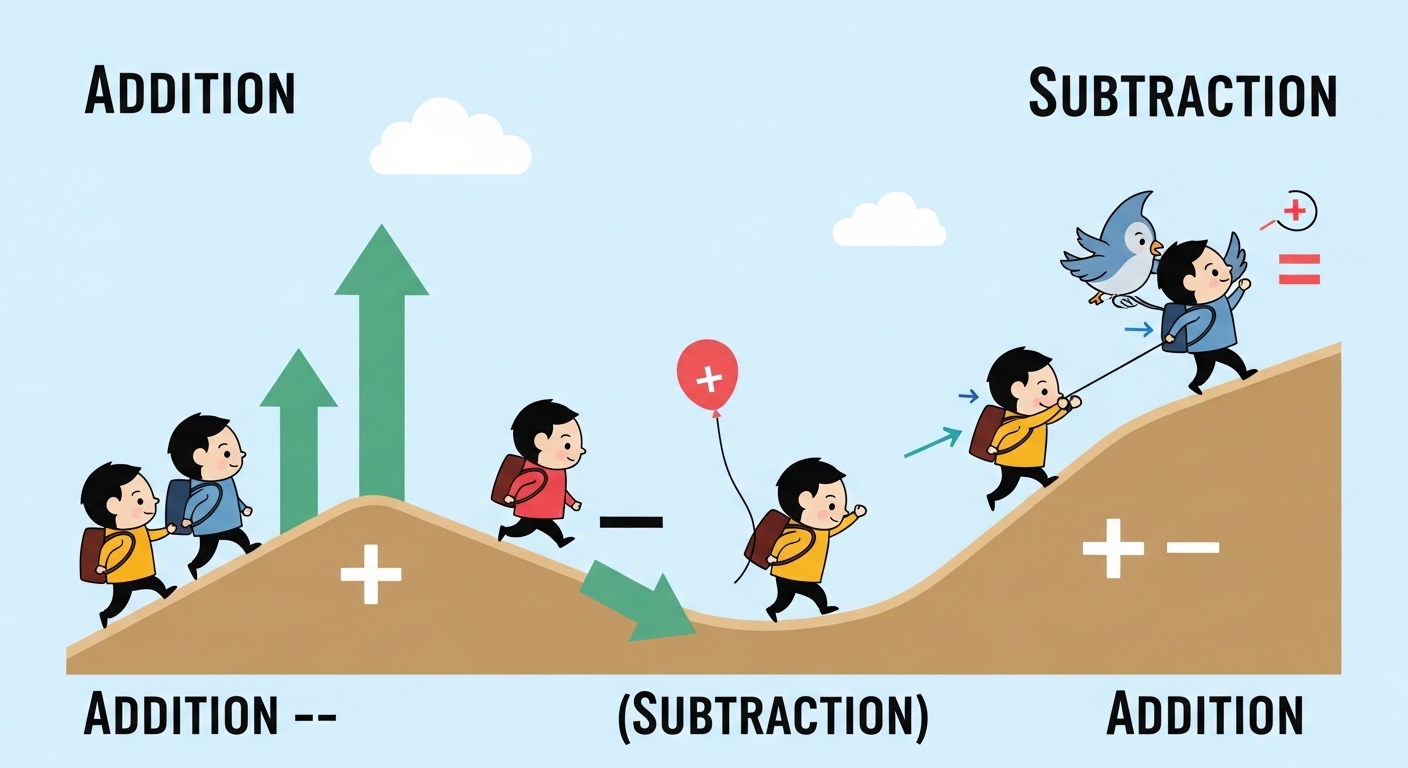
Ever sat there staring at a math problem, feeling like the numbers are playing some sneaky game of hide-and-seek? Yeah, me too. There’s this weird beauty in adding and subtracting positive and negative numbers it’s like life itself in numerical disguise. Some days you’re soaring high with positives, some days you stumble into negatives, and sometimes, the sum of it all surprises you.
I remember helping my younger cousin with her SAT Math sections, and she literally gasped when I told her that subtracting a negative is basically adding a positive. “Wait, whaaat?” she said, eyes wide like she’d discovered a hidden superpower. That’s the moment I realized, math isn’t just numbers it’s emotional, it’s playful, it’s about confidence, determination, and a little bit of mental gymnastics.
So let’s dive into this world where plus meets minus, and discover how mastering these little rules can not only boost your academic ability but also your mental power and retention power. Buckle up it’s gonna be a fun ride.
| Operation | Example | How to Think About It | Result |
|---|---|---|---|
| Positive + Positive | 5 + 3 | Just add the numbers | 8 |
| Negative + Negative | -5 + (-3) | Add absolute values, keep negative sign | -8 |
| Positive + Negative | 7 + (-4) | Subtract smaller from larger, keep sign of larger | 3 |
| Negative + Positive | -6 + 2 | Subtract smaller from larger, keep sign of larger | -4 |
| Positive – Positive | 8 – 5 | Subtract as usual | 3 |
| Negative – Negative | -6 – (-3) | Subtract negative = add positive | -3 |
| Positive – Negative | 5 – (-2) | Subtracting negative = add | 7 |
| Negative – Positive | -4 – 3 | Subtract as usual, negative stays | -7 |
Understanding the Basics: Why Positives and Negatives Matter
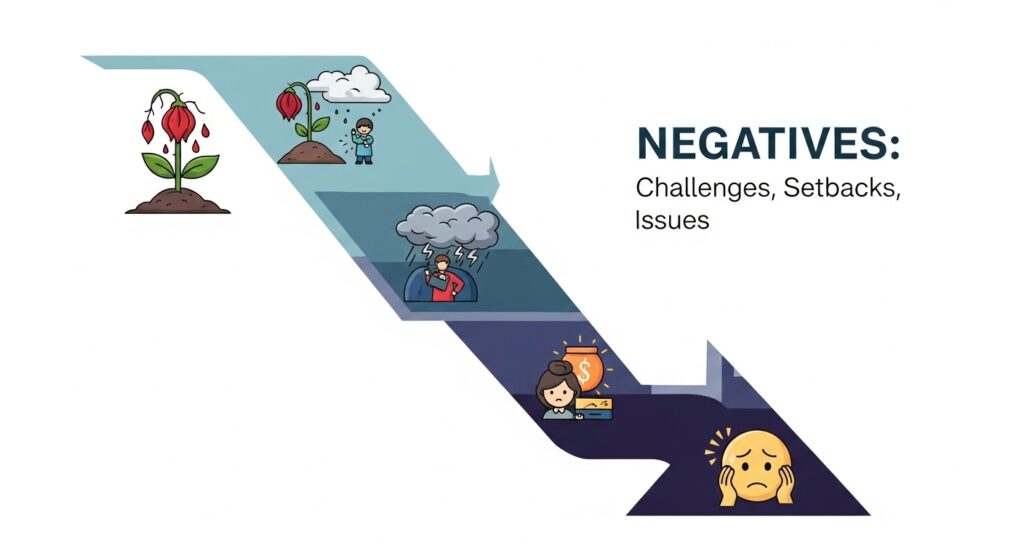
Before we jump into practice problems and tricky tricks, let’s talk about why this even matters. You know, it’s not just about passing your SAT exam or hitting high scores in your SAT Math sections.
The ability to add and subtract positive and negative numbers is like learning a tiny life hack. It trains your brain to think in multiple dimensions, prepares you for high school, middle school, or even college math, and boosts your problem-solving methods.
Here’s the simplest way to think about it: positives are like smiles in your bank account, and negatives are like withdrawals. If you add a negative, it’s like spending some of your saved smiles.
If you subtract a negative, surprise! You just found an extra smile lying around. Crazy, right? And this simple mental model can make SAT preparation a lot less scary.
The Dance of Numbers: Adding Positives and Negatives
When you’re adding positive numbers, well, that’s easy two good things just combine. But toss in a negative and suddenly it’s like mixing chocolate and pickles…at first confusing, but once you get it, it’s oddly satisfying.
- Positive plus positive: straightforward, just add ‘em.
- Negative plus negative: same deal, but you end up going down. Think debt piling up.
- Positive plus negative: hmm, now we’re subtracting in disguise. Take the smaller absolute value away from the bigger one, keep the sign of the bigger.
One of my friends, who teaches SAT coaching, says it’s all about finding new methods of solving with SAT practice. She tells her students, “Imagine the numbers as little characters in a story. Who’s stronger? Who’s weaker? That’s your answer.” Makes math feel alive, and honestly, it works.
Subtracting Positives and Negatives: A Twist in the Tale
Here’s where a lot of students trip up. Subtracting isn’t just taking away it’s flipping things around. When you subtract a positive, you go down. When you subtract a negative, you go up. Mind blown, right?
Think of it like a seesaw. If your friend is sitting on the positive side and you pull them away, you go down. But if they’re sitting on the negative side and you pull them away…suddenly, you rise.
This is why SAT Math sections often sneak in questions like these they test not just knowledge, but aptitude development and the ability to gain continuity in thinking.
- Example: 7 – (-3) = 7 + 3 = 10
- Example: -4 – 6 = -10
- Example: -5 – (-2) = -5 + 2 = -3
Notice the pattern? Once you see it, your confidence skyrockets. You start thinking, “Hey, I can do this!” and that’s half the battle.
Tips and Tricks from Real Life: Making Numbers Less Scary

Here’s a little secret continuous learning and playful methods make math way less intimidating.
- Use a number line. Seriously, it’s like a little road map where your numbers go on a journey.
- Relate numbers to money or temperature. Positive is hot, negative is cold, easy to remember.
- Play friendly competitions with peers or siblings make a game out of SAT mock test questions.
I remember a story from a parent who said, “We made math a board game at home my kid was doing subtraction of negatives while racing to the finish line!” It’s not just cute, it’s effective. Combining weekly assessments with fun games builds skills and competencies in ways traditional drills don’t.
Why This Matters for the SAT and Beyond
Okay, let’s tie it to the bigger picture. Mastering adding and subtracting positive and negative numbers is not just a subject understanding exercise; it’s part of building academic performance for US schools and beyond.
- Taking up the SAT in high school gives students the edge to boost the aptitude of students.
- Regular practice improves score retention and knowledge mastery.
- It trains mental power, competence, and determination.
And here’s something interesting many students who practice these operations regularly tend to excel in other areas too, like language arts, logical reasoning, and exam strategy. Why? Because the brain learns to juggle multiple rules at once, improving cognitive flexibility.
Creative Ways to Practice: From Homework to Online Learning
There’s no rule that says practice has to be boring. In fact, the best way to get really good at adding and subtracting positive and negative numbers is to mix interactive sessions, self-guided practice, and live online classes.
- Try making up your own problems and solving them backwards.
- Compete with friends on a platform like 98thPercentile platform or similar online learning sites.
- Use free trial for SAT prep resources to explore new problem-solving methods.
Even simple things like keeping a daily math journal can gain continuity in your learning. Note down mistakes, discoveries, and aha moments soon enough, the patterns just stick.
Mistakes People Usually Make (and How to Avoid Them)
We all mess up sometimes. Here’s the scoop:
- Confusing subtraction with addition. Remember: subtracting a negative flips the sign.
- Forgetting absolute values. When adding opposite signs, always check which number is bigger.
- Rushing through practice questions without thinking about the story the numbers tell.
One of my students in summer programs for SAT prep said, “I used to panic, but then I started visualizing the numbers as characters in a story. Now it’s fun!” It’s a small tweak but makes a huge difference in exam difficulty.
Advanced Tips: From Student to SAT Star

For those really aiming to score high on the SAT, here’s where it gets juicy:
- Practice comprehensive learning don’t just memorize rules, understand them.
- Take weekly assessments seriously, but mix them with playful exercises.
- Learn multiple problem-solving methods sometimes a tricky subtraction can be solved faster using a creative approach.
- Build confidence by celebrating small victories like finally mastering a tough negative number combo.
These tips aren’t just about test readiness, they’re about shaping academic ability for life. And yes, your brain actually gains continuity from repeated, varied exposure to these concepts.
Real-Life Applications: Why Negatives Aren’t Just Numbers
Believe it or not, adding and subtracting positive and negative numbers comes up everywhere bank accounts, temperature readings, even video game scores. A little aptitude development here has huge payoffs.
- Balancing your budget? Negative numbers everywhere.
- Checking sports stats? Sometimes a minus goal counts.
- Daily life decisions? They often involve trade-offs that mirror math problems.
I’ve always liked the analogy from an SAT coach: “Math is life in shorthand. Negatives are obstacles, positives are advantages, and your brain is the superhero navigating both.”
How to Make Practice More Personal

Want to make this truly stick? Customize your practice.
- Turn problems into mini-stories about your day.
- Use your hobbies like sports stats, cooking measurements, or video games to create practice questions.
- Track your progress visually charts, graphs, or even a scrapbook of numbers.
These tiny hacks help in exam strategy, score retention, and aptitude development, while keeping the process fun and engaging.
Frequently Asked Questions
negative and positive rules
Positive and negative numbers follow rules where adding numbers with the same sign keeps the sign, while adding numbers with different signs takes the sign of the larger absolute value.
rules for adding and subtracting negative numbers
When adding negatives, combine their absolute values and keep the negative sign; when subtracting, convert it to addition of the opposite.
adding positive and negative numbers
To add a positive and a negative number, subtract the smaller absolute value from the larger and take the sign of the number with the larger absolute value.
negative and positive number rules
Positive numbers increase value, negative numbers decrease value, and combining them depends on their signs using addition or subtraction rules.
how to add and subtract negative numbers
Change subtraction to addition of the opposite, then follow the rules of adding numbers with the same or different signs.
Read this Blog: https://marketbellione.com/what-are-integers/
Conclusion: Embracing the Ups and Downs
Learning adding and subtracting positive and negative numbers is more than just a math skill it’s a mindset. It teaches determination, hard work, confidence, and the joy of discovery. Just like welcoming a new chapter in life, mastering these rules shows that ups and downs aren’t scary they’re opportunities to grow.
So whether you’re preparing for SAT preparation, aiming to master math for your college years, or just want to improve your mental power, remember:
each positive and negative number is a step toward knowledge mastery, exam readiness, and personal growth. Celebrate the wins, learn from the setbacks, and keep your brain sharp with creative, playful practice.
And hey, share your favorite number stories or tips in the comments let’s make this math journey as lively as it deserves to be.