
I remember once foggy morning, tea gone cold, brain not quite awake yet I tried to say “I woke up late” in Spanish and somehow ended up telling someone I was waking the universe.
Which, okay, poetic, but wildly wrong. That’s when Spanish grammar stopped being just rules on a page and started feeling like a living, breathing thing that trips you up when you’re not paying attention.
And that’s where Despertarse (Spanish verb) enters like a slightly dramatic character. It’s not just “to wake up” it’s a reflexive verb, a self-action, a moment of becoming aware, like your brain turning the lights back on.
Learning how it bends and twists through time especially in the Preterite tense and the Command tense (imperative mood) is like learning how to narrate your mornings, your naps, your accidental oversleeps… all of it.
So let’s wander through it, not stiffly, but like a conversation you’d have half-awake, slightly messy, but oddly memorable.
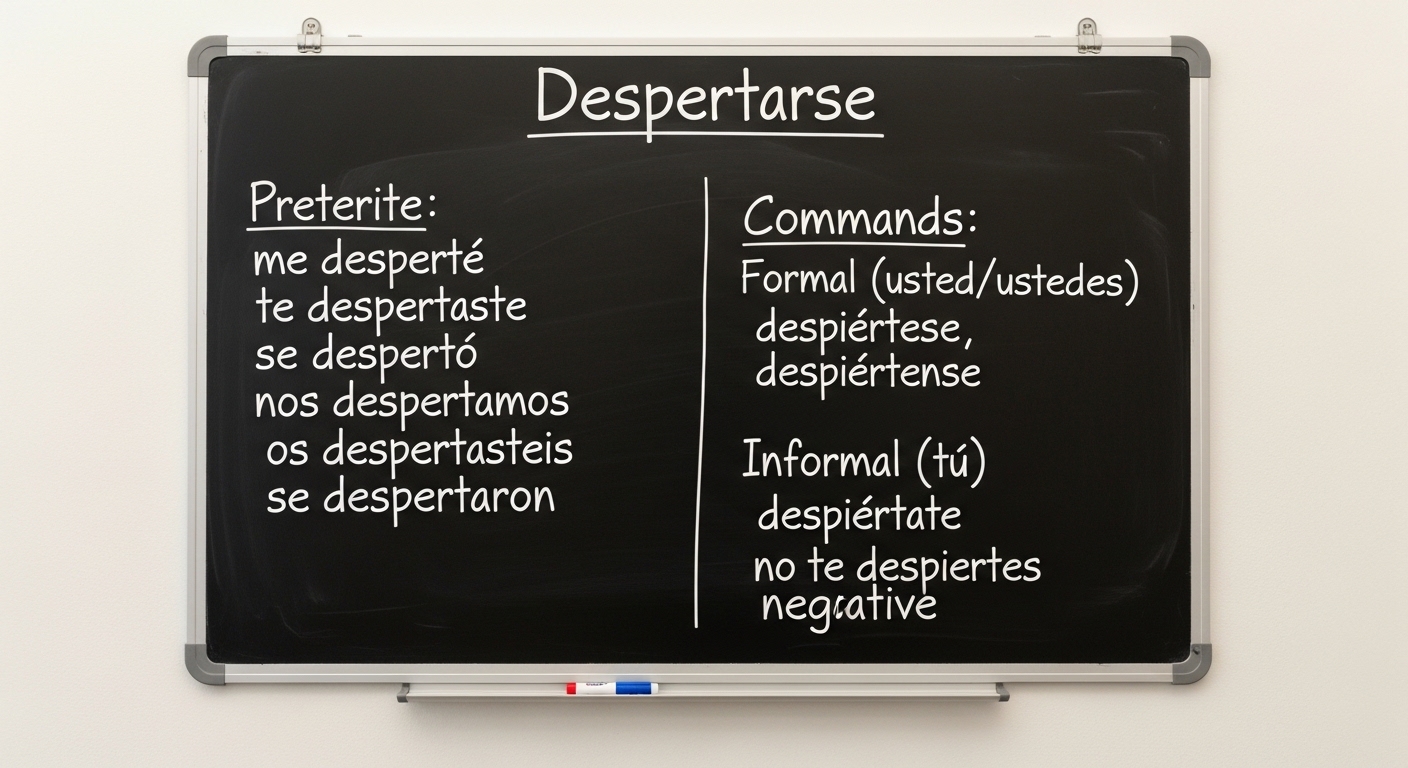
Despertarse Conjugation Preterite (Past Tense)
| Subject Pronouns | Conjugation | Meaning |
|---|---|---|
| yo | me desperté | I woke up |
| tú | te despertaste | you woke up |
| él/ella/usted | se despertó | he/she/you woke up |
| nosotros | nos despertamos | we woke up |
| vosotros | os despertasteis | you all woke up |
| ellos/ellas/ustedes | se despertaron | they/you all woke up |
Understanding the Soul of “Despertarse”
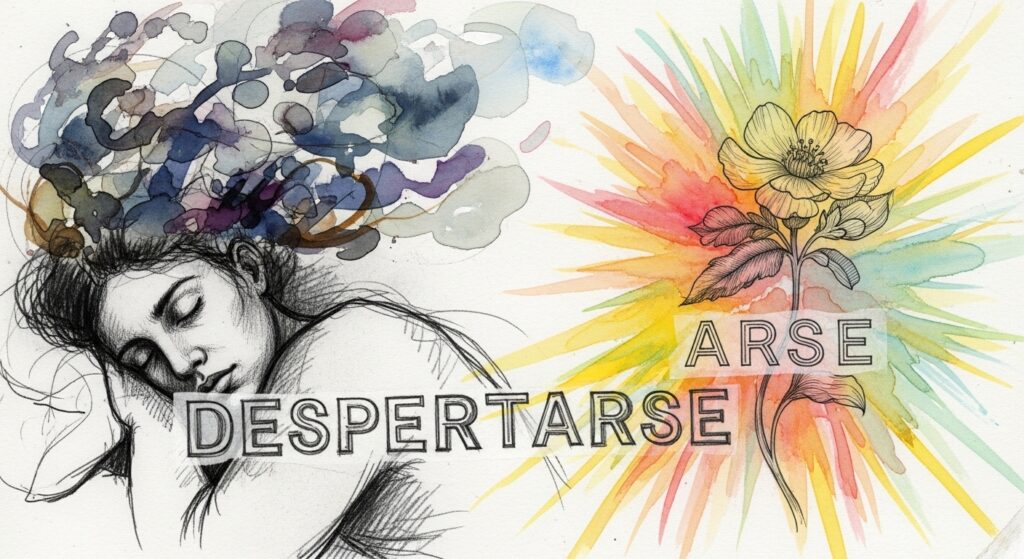
Before we jump into charts and endings and all that crunchy stuff, let’s just sit with the verb itself: verb infinitive (despertarse). It’s reflexive, meaning the action loops back to you. You wake yourself up, even if an alarm clock is screaming at you like it’s got personal issues.
That’s where Reflexive pronouns (me, te, se, nos, os) come in, quietly attaching themselves like little shadows:
- Me despierto temprano (I wake up early… or at least I say I do)
- Te despiertas con café (you wake up with coffee, hopefully strong)
- Se despierta tarde (someone… not naming names… wakes up late)
These pronouns are tied to Pronouns (yo, tú, él/ella/usted, nosotros, vosotros, ellos/ellas/ustedes), which basically decide who is doing the waking. And yeah, it sounds simple until you forget one and suddenly your sentence feels… incomplete, like toast without butter.
In the grand world of Spanish verb conjugation, reflexive verbs sit in this slightly quirky category. They behave like Regular verbs, until suddenly they don’t, and you realize, oh wait this is one of those subtle shifts you were warned about.
Despertarse Conjugation Preterite: Telling What Already Happened
Now we get into the juicy part: the past. Not the vague past, but the done and dusted past. The Past tense (preterite) is for completed actions, like a nap that actually ended (rare, but happens).
Here’s the full despertarse conjugation preterite, with all the Subject pronouns doing their thing:
- yo → me desperté
- tú → te despertaste
- él/ella/usted → se despertó
- nosotros → nos despertamos
- vosotros → os despertasteis
- ellos/ellas/ustedes → se despertaron
Notice how the endings follow typical Verb endings (-ar, -er, -ir) patterns, but with that reflexive twist. It’s like dressing up a regular verb in slightly fancier clothes.
And pronunciation? It kinda matters, yeah:
- me (meh)
- te (teh)
- se (seh)
- stress falls like: despertaSTÉ, despertaSTÉIS, you get the rhythm eventually
Let’s bring in some real-ish sentences, the kind you might actually say while half-talking to someone:
- Me desperté de una siesta and forgot what year it was
- Nos despertamos tarde because the alarm betrayed us
- Se despertaron justo a tiempo, somehow, like magic or luck or both
The Preterite tense (completed past actions) is perfect for storytelling. Think of it like snapshots each sentence a little frozen moment.
Despertarse Conjugation Commands: Telling People to Wake Up (Nicely… or Not)
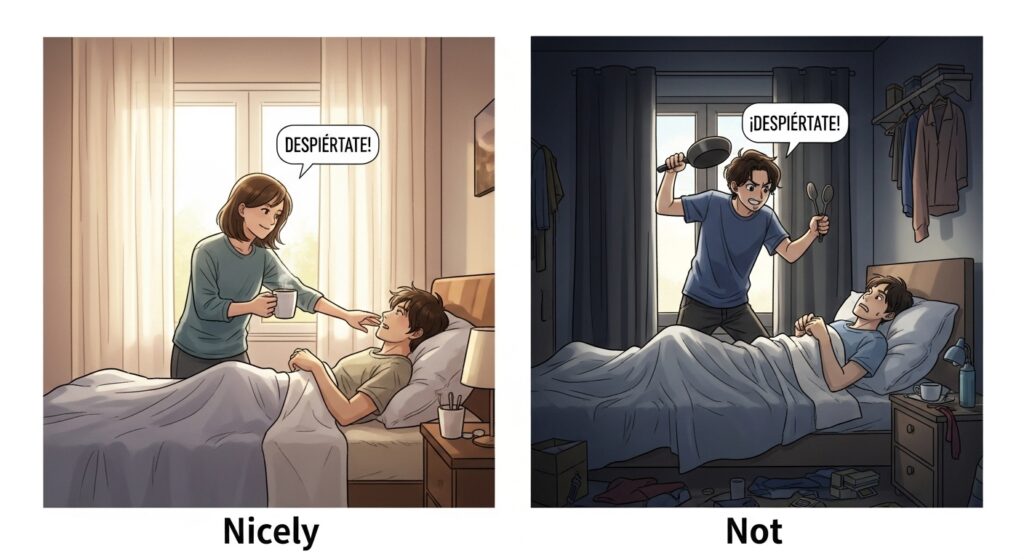
Ah yes, the art of telling someone to wake up without starting a war. The Imperative (commands) is where tone matters… a lot.
Let’s look at Spanish command tense verbs for despertarse:
Informal Commands (tú)
- Despiértate (wake up!)
- No te despiertes (don’t wake up… maybe let them sleep, finally)
Formal Commands (usted)
- Despiértese
- No se despierte
Plural Commands
- Despertémonos (let’s wake up… reluctantly)
- Despiértense (you all wake up, come on now)
This is where things get spicy with Irregular verbs patterns. The stem change (e → ie) pops up in commands like despiértate. It’s not random, but it sure feels like it at first.
And placement of those Reflexive pronouns? Oh, they like to move around:
- Attached: despiértate
- Before verb (negative): no te despiertes
It’s like they have moods.
How to Conjugate Despertarse Without Losing Your Mind
Let’s be honest, learning how to conjugate despertarse can feel like juggling spoons. But there’s a rhythm if you look close enough.
Here’s a sorta human way to think about it:
- Start with the base: despertar
- Apply tense endings (preterite, present, etc.)
- Add reflexive pronoun based on subject
- Adjust for any stem changes (sometimes yes, sometimes nope)
Compare across tenses to feel it:
- Present: me despierto
- Preterite: me desperté
- Future: me despertaré
- Conditional: me despertaría
That’s your Tense comparison, and it’s honestly one of the best ways to build Verb conjugation mastery.
Everyday Life with Despertarse (Because Grammar Should Live Somewhere)
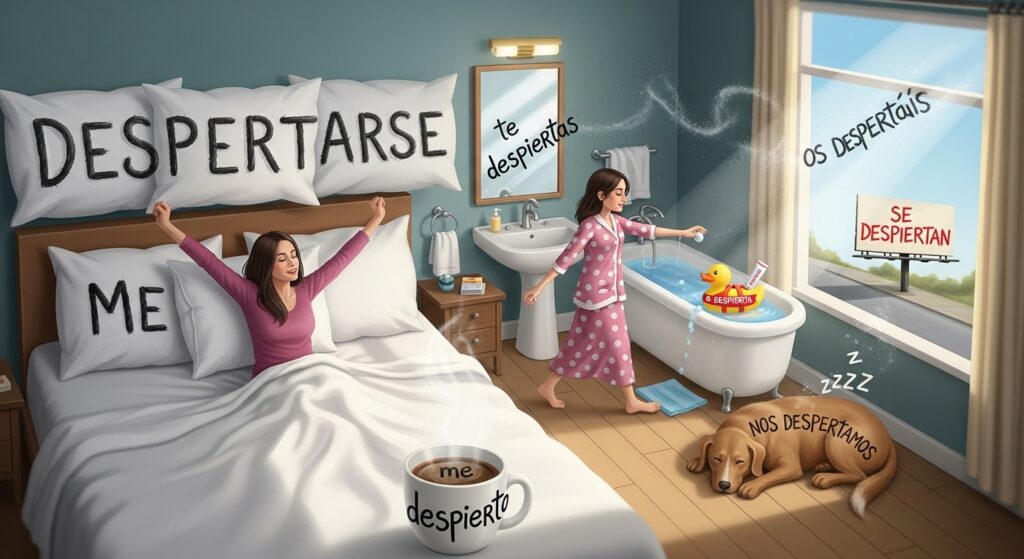
You don’t just learn verbs to pass tests (well, maybe you do, but still). You learn them to talk about life messy, sleepy, coffee-dependent life.
Think daily routines:
- waking up early for the nuevo año escolar (new school year)
- accidentally sleeping through alarms
- that glorious siesta (nap) that turns into a time vortex
Examples that feel lived-in:
- Me despierto temprano but regret it instantly
- Te despertaste con lluvia, and the whole day shifted mood
- Se despertó feliz, which honestly feels rare enough to mention
This is where Conversational Spanish meets real human experience. It’s not perfect, it’s not polished, but it’s real.
Despertarse vs Other Common Verbs (A Friendly Comparison)
To really get despertarse meaning and usage, it helps to compare it with other verbs you’ll bump into constantly:
- Ser vs Estar (identity vs state… deep stuff)
- Ir and Venir (movement, direction, confusion sometimes)
- Tener (to have, but also to feel… because Spanish likes drama)
- Gustar (likes, but structured backwards… surprise!)
- Acabar de (just did something, like acabo de despertarme)
Each of these plays a role in storytelling. For example:
- Acabo de despertarme y ya necesito café (I just woke up and already need coffee)
See how it flows? That’s Everyday expressions in action.
Practice Activities That Actually Help (Kinda Fun Too)
Let’s not pretend Practice activities are always exciting but they don’t have to be dull either.
Try these:
- Write a mini story about yesterday using preterite tense Spanish examples
- Describe your morning routine using reflexive verbs
- Translate random thoughts (like “I woke up confused”) into Spanish
- Do quick verb drills Spanish style: say forms out loud while pacing around
You can also use:
- Conjugation charts
- Reading comprehension passages
- Spanish grammar lessons online
- even slightly chaotic educational Spanish videos
The key is repetition… but like, not the soul-crushing kind.
Common Mistakes (We All Make Them, Seriously)
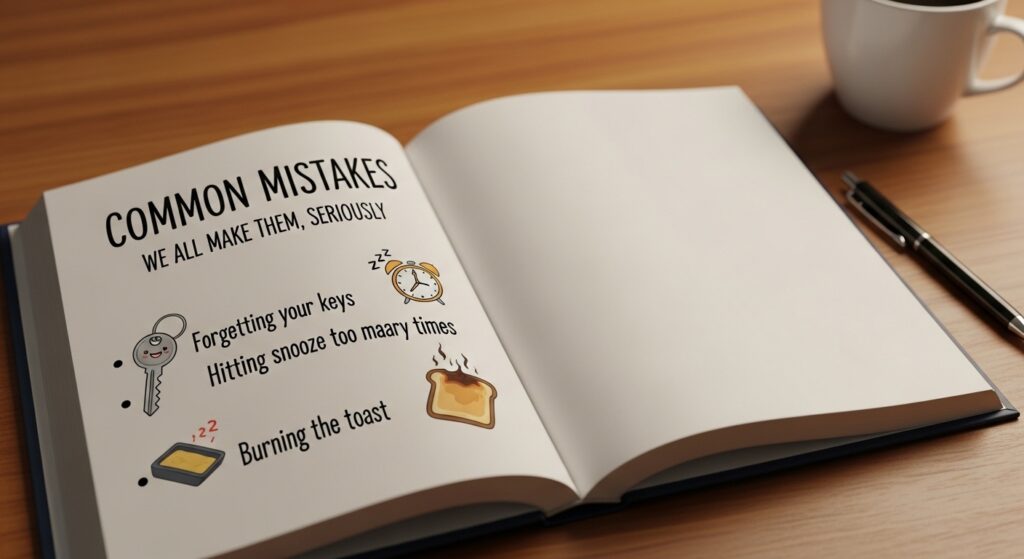
Let’s just normalize messing up:
- Forgetting the reflexive pronoun (desperté instead of me desperté)
- Mixing up tenses (me despierto ayer… nope)
- Overthinking command forms until your brain just… quits
Even advanced learners slip. It’s part of the whole Spanish language learning journey.
One teacher once said, kinda laughing, “If you never make mistakes, you’re probably not actually trying.” And yeah, that stuck.
Lesson Summary (The Wake-Up Call, Literally)
So here’s the deal:
- Despertarse is a reflexive verb meaning “to wake up”
- In Preterite tense, it describes completed actions
- In Command tense, it tells people (or yourself) to wake up
- Reflexive pronouns are essential, not optional
- Patterns exist… but they don’t always behave
This fits into the broader world of:
- Spanish verb tenses explained
- Grammar instruction
- Beginner to intermediate Spanish progression
And slowly, almost without noticing, you start thinking in Spanish. Not perfectly, not always correctly, but enough to feel it.
Frequently Asked Questions
despertarse conjugation
Despertarse is a reflexive Spanish verb meaning “to wake up,” and it is conjugated with reflexive pronouns (me, te, se, nos, os) depending on the subject.
despertarse conjugation preterite
In the preterite tense, despertarse describes completed actions in the past, such as me desperté (I woke up) and se despertó (he/she woke up).
is despertarse a stem changing verb
Yes, despertarse is a stem-changing verb (e → ie) in the present tense, but it does not stem-change in the preterite.
despertarse preterite
The preterite of despertarse includes forms like me desperté, te despertaste, and se despertaron, used for actions that already happened.
despertar preterite
Despertar (non-reflexive) follows the same preterite conjugation pattern as despertarse but without reflexive pronouns, e.g., desperté and despertó.
Read this Blog: https://marketbellione.com/misspelled-words-by-children/
Final Thoughts: Waking Up, In More Ways Than One
Learning a verb like despertarse isn’t just about conjugation. It’s about learning how to describe moments small ones, like opening your eyes, and bigger ones, like starting something new.
Language has this quiet magic. One day you’re translating in your head, the next you’re just… speaking. Messy, imperfect, but real.
If you’ve made it this far, maybe try this: write one sentence about your morning in Spanish. Keep it simple. Keep it honest.
And if it comes out a little weird? Good. That means you’re learning.
If you’ve got your own funny or frustrating despertarse moments, or a sentence you’re unsure about, share it. That’s how this whole thing gets better—together, a little sleepy, but getting there.