
Learning Spanish can be like opening a treasure chest full of little surprises you didn’t even know existed. And lemme tell ya, the verb tener that little workhorse meaning “to have” is one of those sneaky verbs that sneaks into every conversation, every story, and every memory you try to share.
But when we talk about the past, things get a lil’ trickier, and that’s where the Preterite and Imperfect tenses come into play. They’re kinda like old friends who show up differently depending on the occasion. So grab a cafecito, settle in, and lemme walk ya through this in a way that feels less like a textbook and more like an actual conversation.
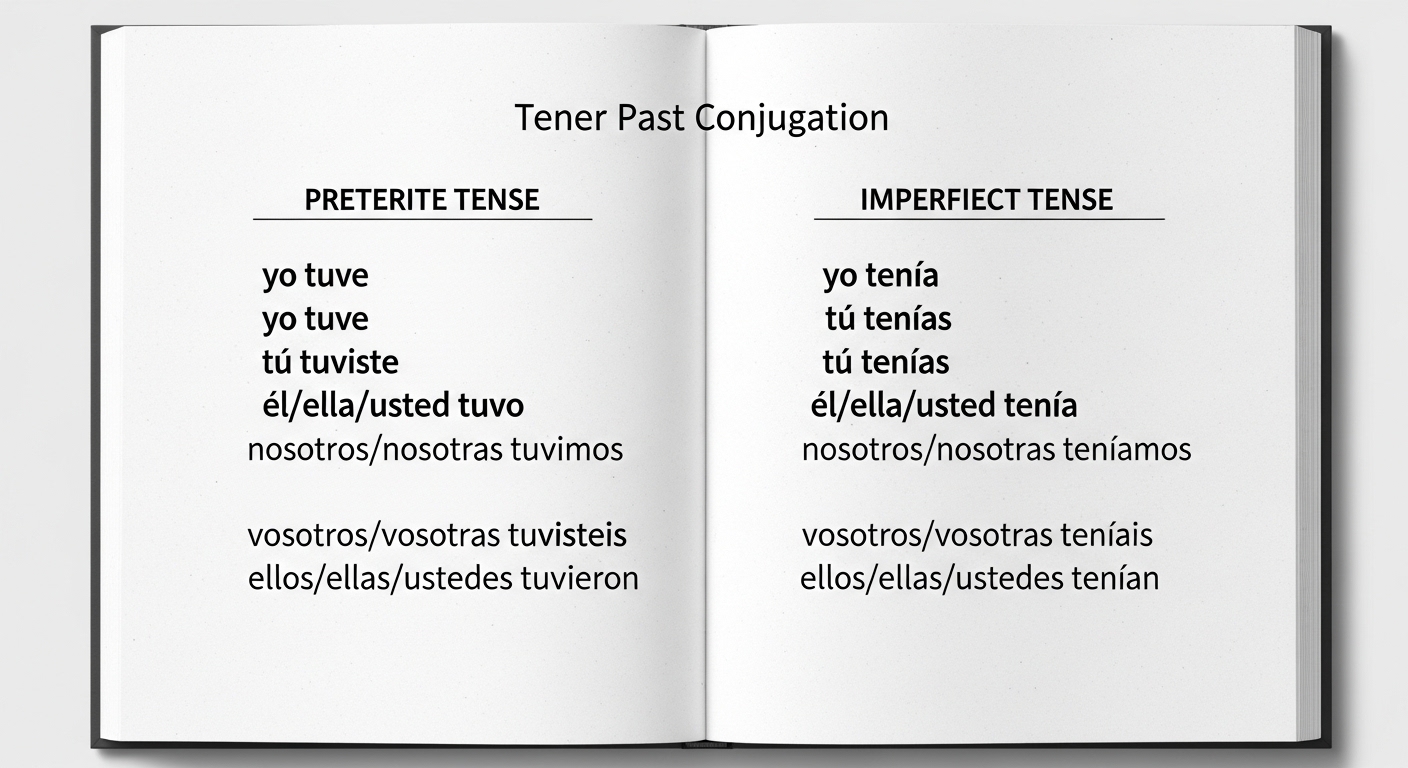
| Person | Preterite (completed actions) | Imperfect (ongoing/habitual) |
|---|---|---|
| Yo | tuve | tenía |
| Tú | tuviste | tenías |
| Él/Ella/Usted | tuvo | tenía |
| Nosotros/Nosotras | tuvimos | teníamos |
| Vosotros/Vosotras | tuvisteis | teníais |
| Ellos/Ellas/Ustedes | tuvieron | tenían |
Understanding Tener in the Past: Preterite vs Imperfect
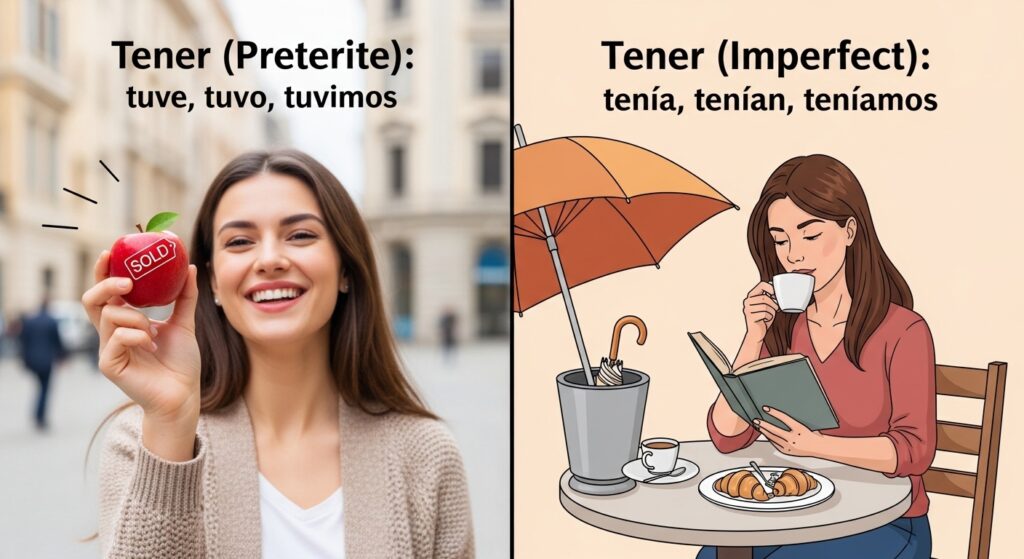
Ok, so here’s the thing tener in the past doesn’t just translate straight into English as “had.” Nah, Spanish is way more expressive than that.
The Preterite is like that friend who tells you exactly what happened, no detours, no extra fluff. It’s perfect for things that happened once, things you can point at and say, “Yep, that happened yesterday.” For instance:
- Yo tuve un gato cuando era niño. (I had a cat when I was a kid.)
- Ella tuvo un accidente el lunes. (She had an accident on Monday.)
Notice how these moments are completed, donezo, past and gone.
Then there’s the Imperfect, which is more like storytelling mode, like when you’re sitting around and saying, “Back in my day…” It’s for things that were ongoing, habitual, or background info:
- Yo tenía muchos juguetes de madera. (I used to have a lot of wooden toys.)
- Nosotros teníamos clases de piano todos los martes. (We had piano lessons every Tuesday.)
Here, tener isn’t just about possession it’s about context, ambiance, and vibe.
One thing that always helps me is imagining tener doing things in a timeline: the Preterite jumps, lands, and leaves; the Imperfect strolls, lingers, and shows you the scenery.
Why Knowing Tener’s Past Conjugation Matters
If you’re prepping for UExcel Spanish Language, MTEL English as a Second Language (ESL 54), or even the PTE Academic, trust me: mastering tener in the Preterite and Imperfect is non-negotiable.
Not only does it pop up in Spanish verb conjugation exercises, but it’s also a key building block for translation & examples, classroom contexts, and language exercises. Think of it like building a strong LEGO foundation without it, your sentences wobble like crazy.
Plus, when you’re teaching or learning, verbs like levantar (to get up), llevar (to carry), almorzar (to have lunch), contribuir (to contribute), and recoger (to pick up) often come bundled with tener in stories.
“Yo tuve que levantarme temprano para almorzar antes de llevar los libros al colegio.” See how smooth that flows? That’s real-life context, not just memorization.
How to Conjugate Tener in Preterite
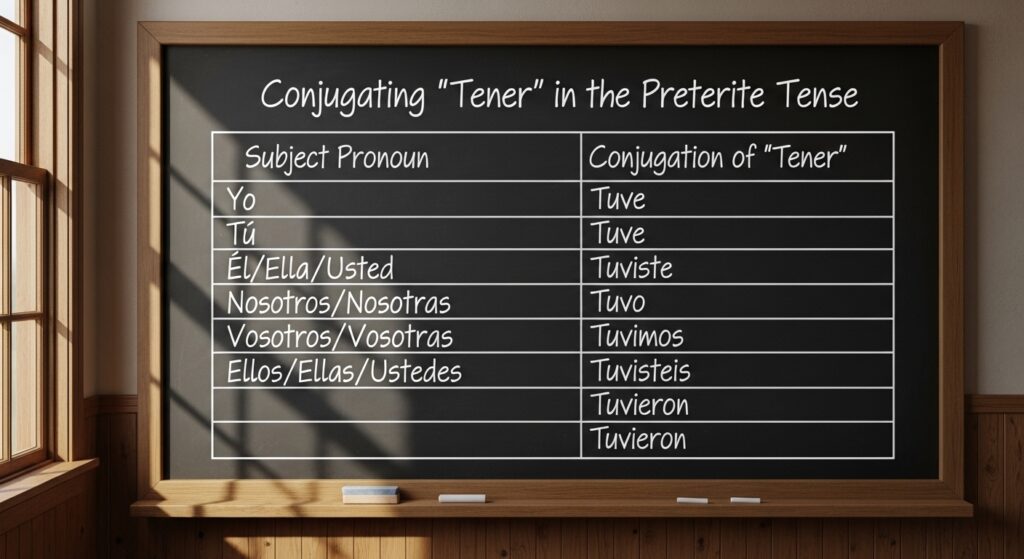
Ok, let’s break it down, but like… casually. None of that “memorize this or fail” vibe.
- Yo tuve
- Tú tuviste
- Él/Ella/Usted tuvo
- Nosotros/Nosotras tuvimos
- Vosotros/Vosotras tuvisteis
- Ellos/Ellas/Ustedes tuvieron
Here’s a neat trick: if you picture tener as a little adventurer jumping through time, the Preterite forms are the exact landing points. Like, yo tuve a great day = boom, landed. Nosotros tuvimos una fiesta sorpresa = boom, landed too.
Pro tip: when practicing for Spanish verb usage exercises or flashcards for language learning, make mini-stories using the Preterite it sticks better than endless repetition.
How to Conjugate Tener in Imperfect
Now, the Imperfect is chill, it’s looser, more storytelling, more “hey remember when…”
- Yo tenía
- Tú tenías
- Él/Ella/Usted tenía
- Nosotros/Nosotras teníamos
- Vosotros/Vosotras teníais
- Ellos/Ellas/Ustedes tenían
Picture this: you’re telling your abuela about the summers you spent playing outside. “Cuando era niño, yo tenía una bici roja y andaba por todo el barrio.” Doesn’t that feel like nostalgia already? This is the magic of past tenses in Spanish—it’s not just grammar, it’s memory.
Tener with Other Past Actions: Examples in Context
Sometimes tener hooks up with other verbs like a duo in a telenovela. You gotta see it in action:
- Yo tuve que corregir todos los exámenes antes de almorzar.
- Ella tenía miedo de alcanzar la cima de la montaña, pero lo hizo igual.
- Nosotros tuvimos la oportunidad de continuar nuestro proyecto hasta el año siguiente.
- Vosotros teníais que sacar la basura todas las mañanas, ¿verdad?
Notice how mixing verbs with tener and Preterite vs Imperfect forms creates real storytelling magic. And this is exactly the kind of thing they test on ILTS English as a New Language (250) or NES English to Speakers of Other Languages (ESOL 507) prep.
Common Mistakes Learners Make with Tener in the Past
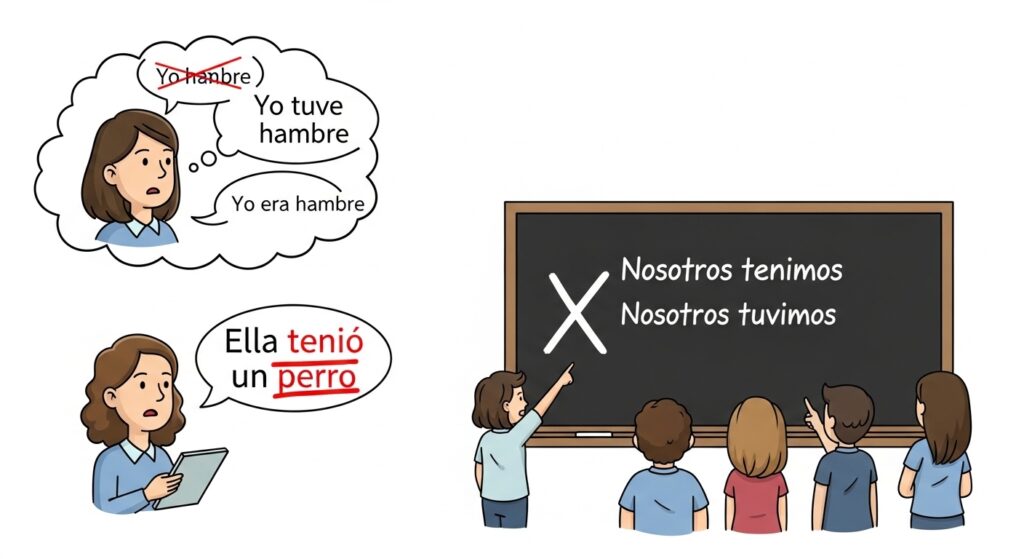
Ahh, the classic mistakes. Don’t worry, everyone trips here at least once:
- Using Preterite when you need Imperfect: “Yo tuve muchos juguetes de niño” vs correct: “Yo tenía muchos juguetes de niño.” The first sounds like you owned them only for one exact moment.
- Forgetting irregular stems: tener changes to tuv- in Preterite. Don’t write “tení” or “tene” it’s like spelling your name wrong every time.
- Mixing contexts: Spanish loves precision. “Nosotros teníamos fiesta anoche” vs “Nosotros tuvimos fiesta anoche” first one sounds weird; second one nails it.
If you practice examples and exercises in context, these mistakes practically vanish.
Tener in Storytelling: Mini-Stories and Cultural Flavors
I love this part. Spanish past tenses aren’t just grammar they’re culture.
Imagine a Spanish grandmother telling her grandchild:
“Cuando yo tenía tu edad, nosotros teníamos una casa pequeña pero llena de risas. Cada domingo teníamos almuerzo con toda la familia y siempre alguien tenía que recoger los platos.”
See how natural that sounds? And if you’ve ever read language instruction materials or academic study guides, you know these anecdotes stick way better than rules alone.
Across Latin America, welcoming a baby girl is celebrated differently. In Mexico, grandparents often say, “¡Felicidades, ya tienen a su princesita!” In Spain, it might be more poetic: “Que tu hija siempre tenga risas y sueños grandes.” All these real-life examples reinforce Spanish verb conjugation in context.
Advanced Uses: Combining Tenses
Once you’re comfy, you can mix tener across Preterite, Imperfect, and other tenses like a pro:
- Conditional: “Yo tendría más paciencia si supiera la respuesta.”
- Subjunctive: “Espero que tú tengas un día bonito.”
- Present Progressive: “Yo estoy teniendo problemas con este ejercicio.”
- Conditional Perfect: “Yo habría tenido más tiempo si no hubiera almorzado tan tarde.”
This is where the magic happens for language learning for ESL/ESOL students. You’re no longer just memorizing—you’re communicating.
Practical Tips to Master Tener Past Conjugation
- Create flashcards for language learning mixing Preterite and Imperfect forms.
- Use mini-dialogues in your diary: “Hoy tuve que andar rápido para llegar a clase, pero cuando tenía tiempo, recogía flores en el parque.”
- Pair with other commonly used verbs: ganar, alcanzar, corregir, continuar, sacar, llevar, levantar.
- Practice storytelling: invent small anecdotes about your childhood, travels, or imaginary adventures.
- Test yourself with exercises from CTEL 1 – Language & Language Development (031) or BULATS Business English, even if it’s just for fun.
Bringing It All Together: Why This Matters
Mastering tener in the Preterite and Imperfect is more than memorizing tables it’s about feeling confident to contribute to conversations, ganar clarity in writing, and alcanzar a deeper understanding of Spanish culture and grammar rules.
When you can tell a story, share a memory, or even joke about a past mishap in Spanish, you’re not just a student you’re a storyteller.
Remember, verbs like tener, andar, levantar, and llevar are the skeleton of real-life expression. And trust me, nothing feels better than nailing “yo tuve que corregir todo y aun así gané la risa de la clase.” That’s victory.
Frequently Asked Questions
tener yo form
The yo form of tener in the present tense is tengo, meaning “I have.”
tener conjugation preterite
The preterite tense of tener is used to describe completed actions in the past, e.g., “I had” (yo tuve).
tener preterite conjugations
The preterite conjugations of tener are:
- yo tuve
- tú tuviste
- él/ella/usted tuvo
- nosotros/nosotras tuvimos
- vosotros/vosotras tuvisteis
- ellos/ellas/ustedes tuvieron
tener preterite conjugation
Tener is irregular in the preterite, with the stem tuv- and specific endings like -e, -iste, -o, -imos, -isteis, -ieron.
tener irregular preterite
Yes, tener is irregular in the preterite because it does not follow the standard -ar/-er/-ir endings and uses the stem tuv-.
Read this Blog: https://marketbellione.com/comer-conjugation-preterite-imperfect/
Final Thoughts
Spanish past tenses are like little time machines. Tener in the Preterite and Imperfect lets you jump, linger, reminisce, and paint vivid stories. Pair it with other verbs, mix tenses, and sprinkle in real-life context, and you’ll be telling tales like a native in no time.
And hey, don’t just take my word for it try writing a tiny story about a baby girl you know, a memorable meal, or a childhood adventure. Use tener, alcanzar, recoger, ganar, sacar, continuar, and watch how natural Spanish starts to feel. Share it, laugh about it, make mistakes they’re all part of the journey.
After all, the beauty of language isn’t just grammar it’s connection. It’s how we remember, laugh, levantar our voices, and celebrate little victories. And now, with tener mastered in the past, your stories can soar higher than ever.