
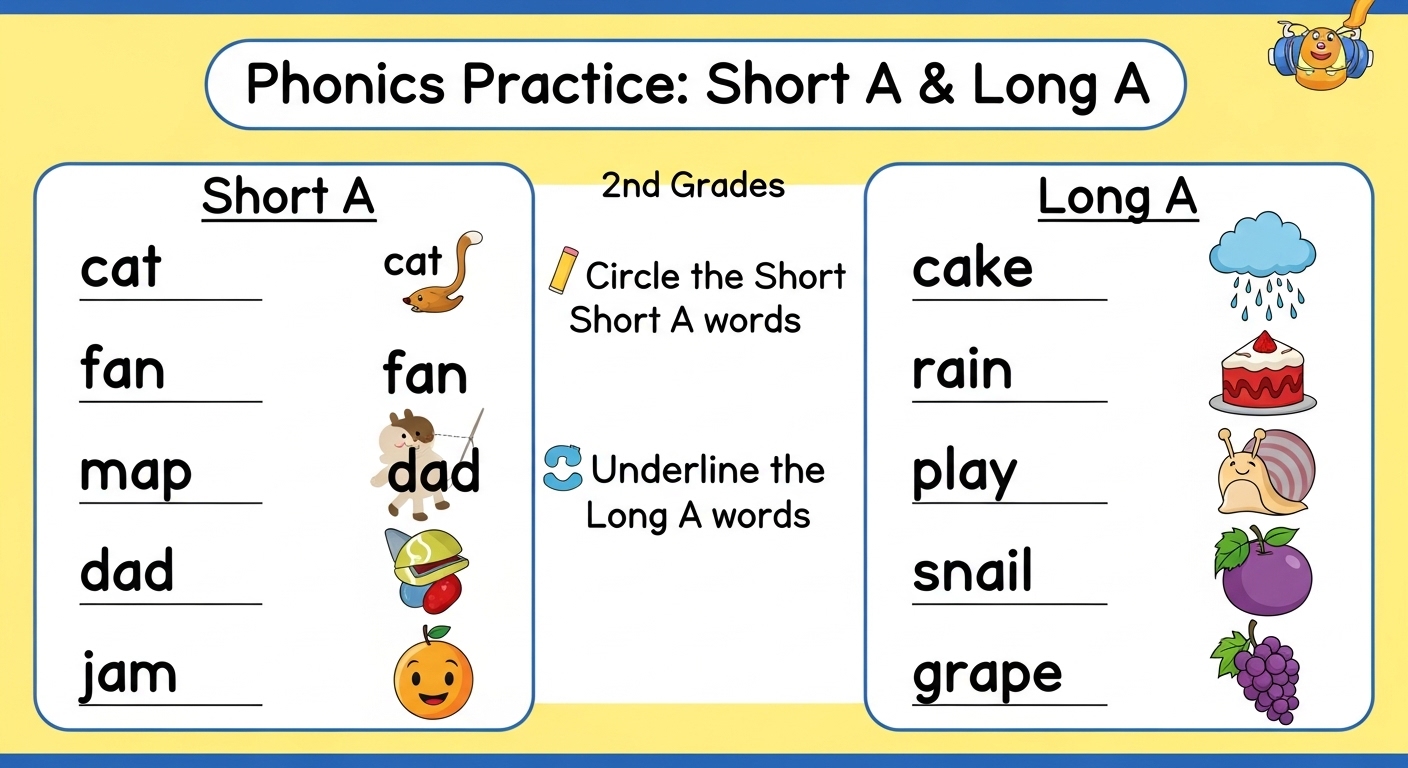
If you’ve ever watched a Grade 2 kid wrestle with reading for the first time, you know it’s like watching a little magician try to pull words outta thin air. Their eyes widen, fingers point, and tiny voices stumble through sentences like they’re tiptoeing over a tightrope.
Phonics, as boring as it sounds to some, is the secret wand behind that magic it’s the bridge between seeing letters and hearing words. And that’s why Grade 2 Phonics Worksheets can be such a game changer, they’re like little treasure maps guiding children to unlock the wonders of literacy, one phoneme at a time.
| Phonics Skill / Topic | Activity Type | Example Worksheet / Exercise |
|---|---|---|
| Phoneme Isolation | Practice | Identify first or last sound in words like “sun” or “dog” |
| Phoneme Segmentation | Worksheets | Break “frog” into /f/ /r/ /o/ /g/ |
| Blending Phonemes | Flashcards | Combine sounds s–a–t → “sat” |
| Substituting Phonemes | Practice | Change /c/ in “cat” to /h/ → “hat” |
| Consonant Blends | Worksheets | Recognize st, bl, tr in words |
| Consonant Digraphs | Flashcards | Identify sh, ch, th |
| Vowel Digraphs | Worksheets | ie, oo, ou, ey, oy exercises |
| R-Controlled Vowels | Worksheets | Identify /ar/, /er/, /ir/, /or/, /ur/ |
| CVCe Words | Practice | Fill missing letters: “c__e” → cake |
| Rhyming Words | Worksheets | Match words that rhyme: moon/spoon |
| Syllable Counting | Worksheets | Clap and count syllables in “elephant” |
| Letter-Sound Correspondence | Flashcards | Match letters to sounds: b → /b/ |
Why Phonics Matters in Grade 2
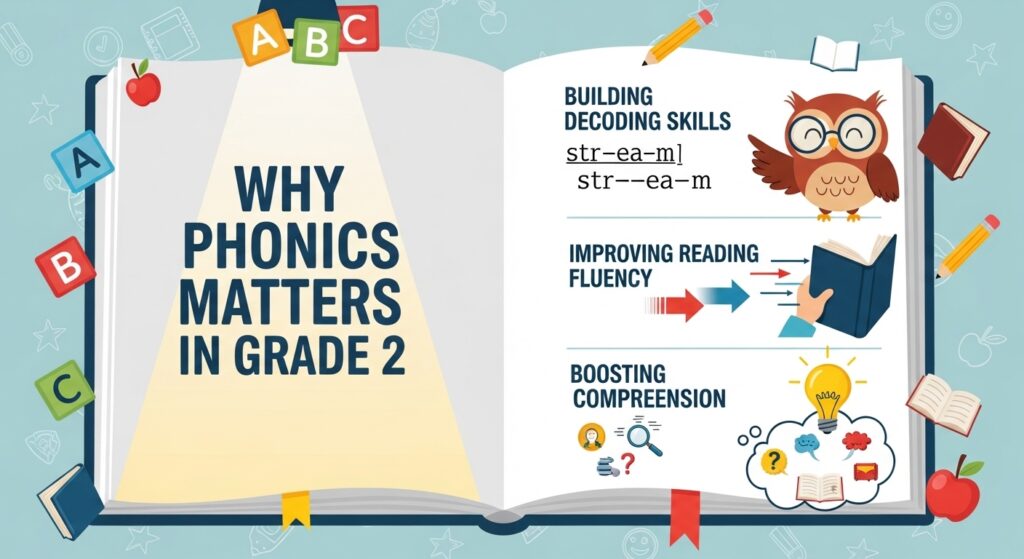
By Grade 2, most kids are past the “look at the picture and guess” stage. They’re ready for the nitty-gritty of phonemic awareness, which is just a fancy way of saying “listening to sounds in words, noticing patterns, and playing with them.”
Kids who master phonics skills early tend to read faster, spell more accurately, and enjoy books more because reading becomes less of a puzzle and more like breathing natural, fluid, and fun.
Phonics Skills at this level focus on blending sounds, phoneme isolation, syllable counting, and recognizing patterns like consonant blends, vowel teams, and r-controlled vowels.
Worksheets and interactive activities help them practice these skills over and over without realizing they’re learning they’re playing with language instead.
Even seasoned parents will tell you: “Once my child started blending phonemes on their own, they started reading bedtime stories to me,” says a mother of a Grade 2 student in New York. And that’s the kind of joy phonics practice can bring.
Exploring Key Phonics Concepts
Phonemic Awareness Skills
Before a child can even spell “cat,” they need to hear it in its simplest form: /c/ /a/ /t/. Phonemic awareness skills focus on this type of listening.
Worksheets for phoneme segmentation ask kids to break words apart, while phoneme isolation exercises ask them to pick the first or last sound in a word. These small steps might feel tedious, but they’re building blocks for reading fluency later.
Activities can include:
- Clapping out individual sounds in “frog”
- Identifying the first sound in “sun”
- Spotting rhyming words like “moon” and “spoon”
Blending Phonemes
Blending is where the magic starts. Kids learn to pull the sounds together to form words. A worksheet might show “s a t” and ask kids to say it fast: “sat!” This skill, surprisingly, is what lets a child move from sounding out CVCe words to reading full sentences.
Substituting Phonemes
This is the fun one where kids start playing word games with you. Take “cat” and change the /c/ to /h/, now you have “hat.” Worksheets and flashcards can make this exercise a mini-adventure in language, strengthening their understanding of how words are built.
Consonant Blends, Digraphs, and Vowel Teams
- Consonant blends: st, bl, tr they combine two consonants but you can still hear both.
- Consonant digraphs: sh, ch, th two letters, one sound.
- Vowel digraphs: ie, oo, ou, ey, oy tricky little teams that produce unique sounds.
Using worksheets that mix these patterns ensures kids are exposed to long vowels, short vowels, and even diphthongs in real words, making their reading skills more adaptable.
Worksheets That Work
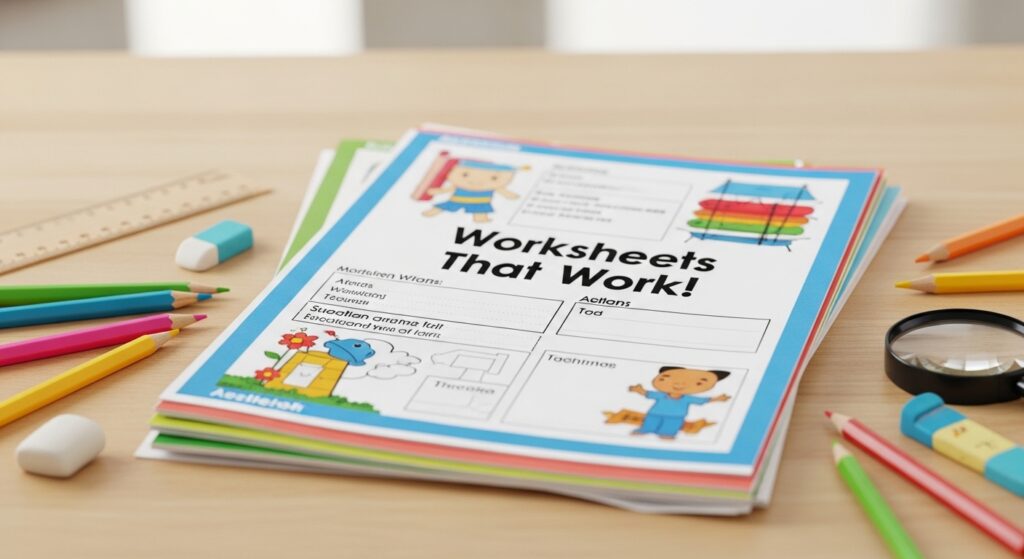
Grade 2 Phonics Worksheets don’t have to be boring. In fact, the more creative, the better. Think:
- Segment words into their sounds using colorful boxes
- Missing letters exercises where kids fill in blanks for words like “b__t”
- Rhyming words games to build auditory memory
- Syllable counting with fun images like frogs hopping on pads
Websites like K5 Learning offer educational content for kids that combines worksheets, workbooks, and interactive games, which make phonics fun and self-directed. When kids see learning as a game, their retention skyrockets.
Bringing Worksheets to Life
Worksheets are just the start. Combine them with:
- Flashcards for quick daily drills
- Phonics board games that use letter-sound correspondence
- Hands-on activities, like building words with letter tiles or clay
For example, one parent recalls: “We made a game where my child had to substitute sounds to escape a ‘dragon’s cave.’ He didn’t even realize he was practicing phoneme substitution!” This makes learning memorable.
Creative Ways to Use Phonics Worksheets
At Home
- Turn them into scavenger hunts: hide letters around the room and have your child blend sounds to form words
- Use worksheets as bedtime stories: each word a new adventure
- Create “word jars” where children pull out common words and segment words out loud
In the Classroom
- Pair worksheets with literacy activities like rhyming words bingo
- Use syllable counting exercises in group chants or songs
- Integrate CVCe words into story-building exercises
On Digital Platforms
- Platforms like K5 Learning offer online interactive worksheets that track phonemic awareness skills
- Combine phonics practice with reading skills assessments to see progress
Why Consistency Matters
It’s tempting to think a worksheet here or there is enough. But phonics is a skill category that grows with repetition. Daily short bursts 10–15 minutes are more effective than an hour once a week.
Think of it like learning to ride a bike; kids need balance, practice, and confidence. The same goes for letter-sound correspondence and manipulating sounds.
Fun Worksheet Themes for Grade 2
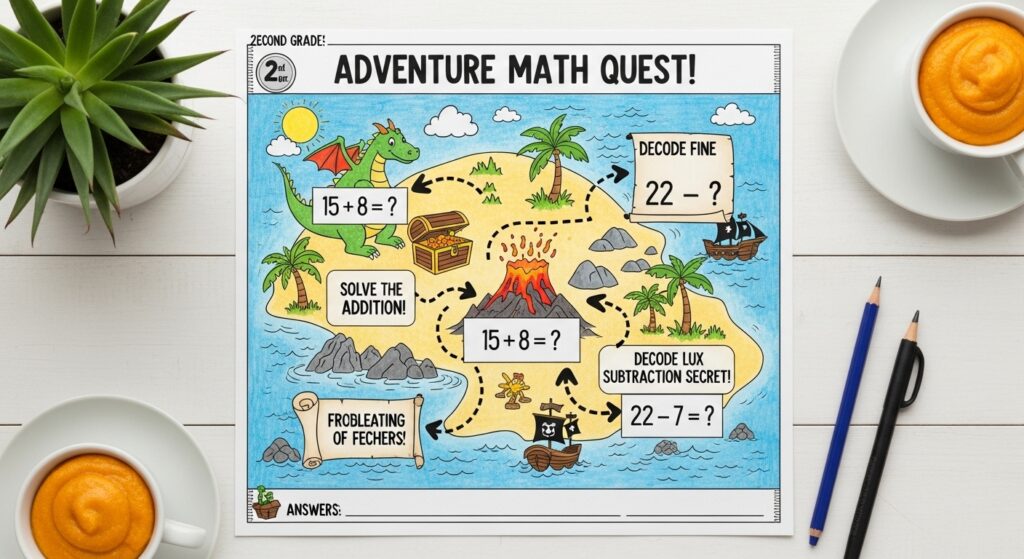
- Animal Sounds: Blend phonemes to discover animals: “l – i – on” → lion
- Magic Spells: Substitute phonemes to cast “word spells”
- Treasure Hunt: Segment words to unlock “treasure chests” of words
- Superhero Words: Identify rhyming words to “power up” superheroes
The more playful, the more engaged the child. And engagement = learning.
Practical Tips for Parents & Teachers
- Keep sessions short but consistent.
- Use bright colors, stickers, or rewards for completing worksheets.
- Mix reading skills practice with phonics worksheets for balance.
- Encourage verbal practice: say the word, segment it, blend it, then use it in a sentence.
- Celebrate small wins, like mastering a tricky vowel digraph.
As one teacher puts it: “A Grade 2 kid who can confidently blend phonemes is like a small wizard discovering the spellbook of language. Every success builds confidence.”
Resources You Can Trust
Some trusted educational platforms and resources for phonics include:
- K5 Learning Worksheets, Flashcards, Workbooks for Kindergarten to Grade 5
- Printable phonics worksheets for specific skills like phoneme isolation, r-controlled vowels, and CVCe words
- Interactive online games for practicing blending phonemes and substituting phonemes
- Educational content for kids covering literacy activities and reading skills
Read this Blog: https://marketbellione.com/algebra/
Frequetnly Asked Questions
2nd grade phonics worksheets
These worksheets help students practice letter-sound relationships, blending, and decoding skills to improve reading fluency.
phonics worksheets grade 2
Designed for grade 2 learners, these worksheets focus on phonemic awareness, vowel teams, consonant blends, and rhyming words.
2nd grade phonics
Covers essential phonics skills such as CVCe words, digraphs, diphthongs, and r-controlled vowels for second graders.
second grade phonics worksheets
Provides structured exercises for reading and spelling, including phoneme isolation, segmentation, blending, and substitution.
phonics for 2nd grade
Engages students with fun activities to strengthen decoding, rhyming, and syllable counting while connecting sounds to letters.
Wrapping It Up: Making Phonics Personal
While worksheets are amazing, the real magic happens when you personalize them. Add your child’s favorite words, incorporate their hobbies, or make phonics practice part of a daily storytime. Let them see themselves as creators of words, not just readers.
Encourage them to write their own mini-stories using the phonics skills they’ve learned suddenly, syllable counting, rhyming words, and consonant blends are not exercises, they’re tools for imagination.
Finally, remember: learning phonics is a journey, and each child moves at their own pace. Celebrate the small wins, laugh at the funny mistakes, and watch as Grade 2 reading skills blossom into a lifelong love of words.
By investing in well-crafted Grade 2 Phonics Worksheets and combining them with engaging activities, parents and teachers can create a playful, interactive, and deeply meaningful learning experience. Your child isn’t just learning to read they’re learning to play with language, hear its music, and dance with words.