
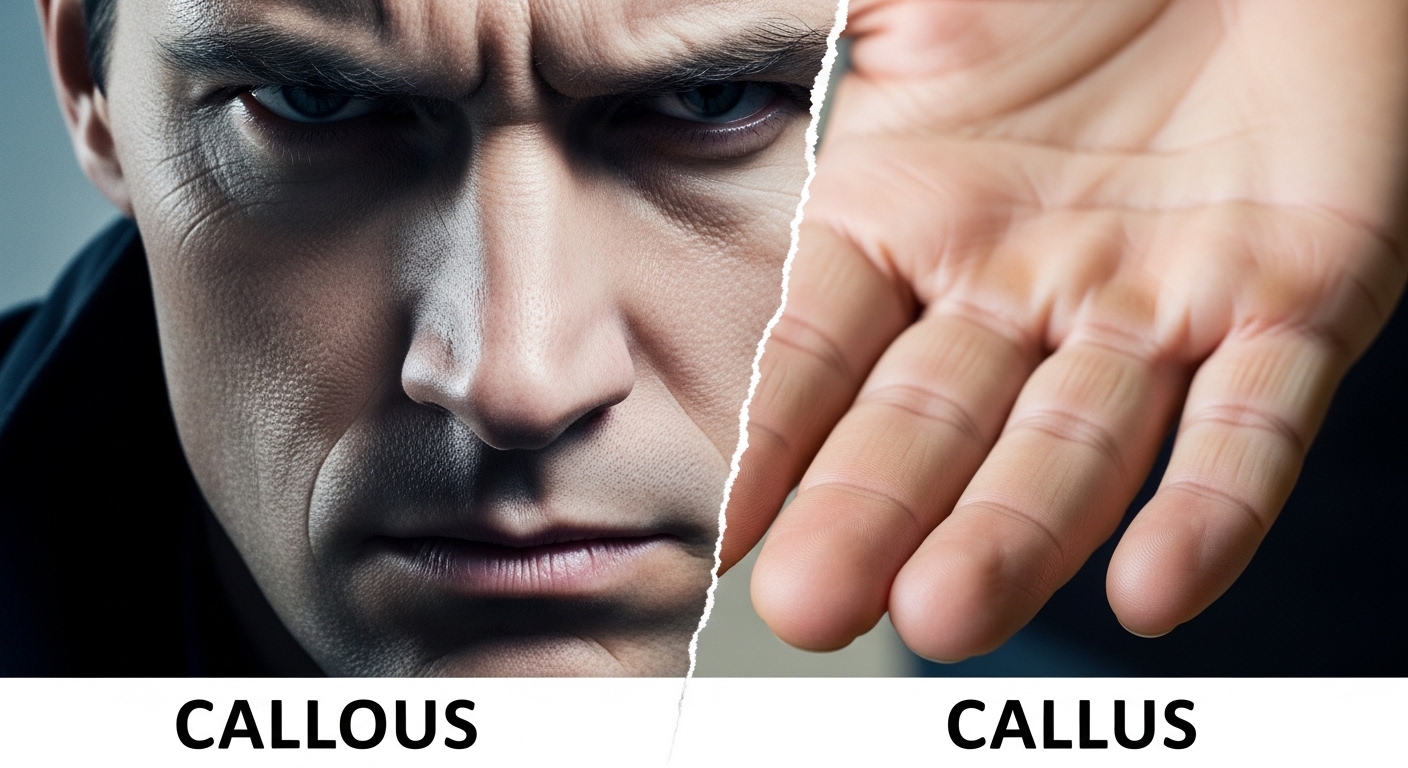
It’s funny how a single letter can change everything. You know, just that lil’ “o” in callous versus callus and suddenly your sentence can swing from literal skin to figurative heart.
I remember my first real encounter with this, when my granddad was trimming the callused edges of his fingertips after a long day in the garden and muttered, “Life sure makes your hands hard… don’t let it make yer heart callous too.”
I stared at him, confused, ’cause I’d just learned callous meant “unfeeling” in school but here it was, all mixed up with dirt under fingernails and localized thickening on knuckles. It’s a tiny semantic battlefield, really, where skin meets psyche.
So lemme walk you through it like barefoot on gravel, you’ll feel every bump.
| Term | Meaning / Usage | Example Sentence |
|---|---|---|
| Callus | Literal skin thickening from friction | “After gardening all day, her hands were callused.” |
| Callused | Adjective for skin with calluses | “Rock climbers often have callused fingertips.” |
| Callous | Figurative: unfeeling, insensitive | “The manager’s callous response upset the team.” |
| Calloused | Adjective for heart or attitude | “Years of disappointment left him calloused inside.” |
What is a Callus Anyway? The Skin Edition
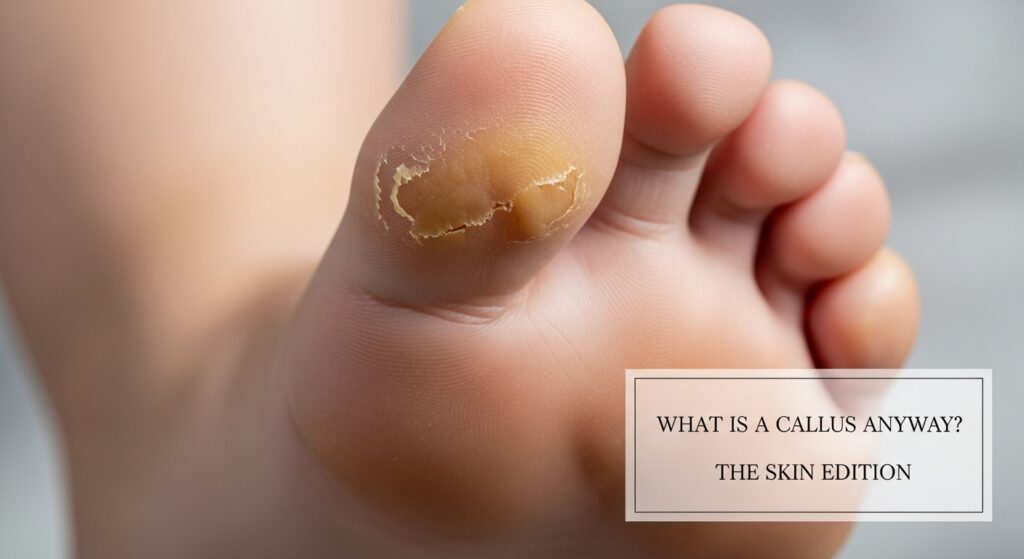
A callus is basically your skin’s way of saying “I’ve had enough of this rubbing, thank you very much.” You get them on hands, knees, even forehead if you’re prostrating in yoga or prayer a lot.
It’s a localized thickening of the skin, formed by repeated friction or pressure. Athletes, gardeners, or anyone who’s walked barefoot too much can develop these stubborn little toughened patches.
Some everyday causes include:
- Running in tight sneakers until the skin thickens
- Chopping wood or gardening with bare hands
- Repetitive kneeling on carpets or concrete floors
- Even nail salons, where frequent buffing and filing can form calluses on fingertips
There’s nothing morally loaded about a callus. It’s a simple biological response. But confusion arises when people say their heart feels callused, thinking it’s the same kinda thing. That’s a slippery slope to callous territory.
Callous: Not Just a Skin Problem, But a Heart Thing
Now, callous with an “o” is figurative. It’s not on your fingernails or knees, but it sure can be on your soul. To be callous is to be unfeeling, desensitized, or socially libertine in ways that sometimes make other humans go “ouch.”
Budget cuts at a charity, heavy-handed force by Egyptian police, or even IRS bureaucrats ignoring the human cost can all be described as callous.
Being calloused is kinda like your heart forming thickened armor you’ve been prostrated under disappointment enough times that empathy becomes optional. People talk about “getting used to pain” or “growing thick-skinned,” but the difference between resilience and callousness is subtle and slippery.
- A calloused politician may prioritize hardcore ideology over human welfare
- Repetitive violations of basic decency can make a social system callous
- Daily life stressors, like traffic or work emails, might make one callous without them even noticing
It’s fascinating how English lets skin and psyche collide like that.
Common Misuses: Callous vs Callus Confusions
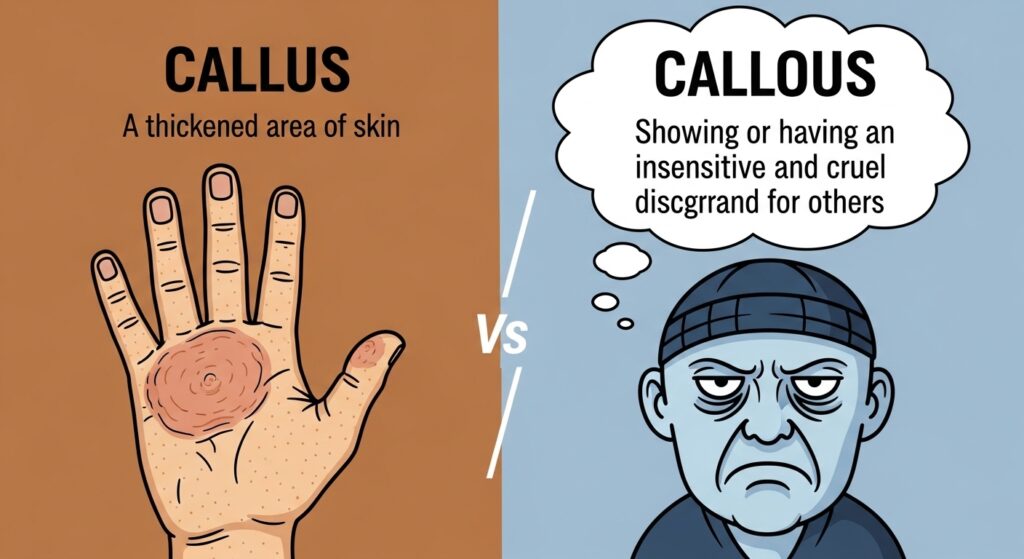
You’d be surprised how often newspapers, Telegraph or Montreal Gazette included, mix these up. People will write about someone “developing a callous on their heart” while showing a photo of barefoot runners with literal callused feet. Classic mix-up.
Here are some patterns to watch for:
- Literal Figurative: callus (on hands, knees, etc.) callous (on feelings, attitude)
- Adjective confusion: callused hands ≠ calloused heart
- Nonparticipial errors: saying “the kid got callous overnight” when you mean literal skin thickening
Understanding this makes you sharper at spotting subtleties in writing, or even crafting more precise messages to friends and family.
Callus in Everyday Life: More Than Just Ugly Skin
Let’s talk practical, fun stuff. Calluses aren’t just inconvenient; they’re badges of activity. Rock climbers get callused fingertips, farmers’ hands tell stories of decades in mud under fingernails, and dancers have toughened knees from countless pirouettes.
- Barefoot childhoods in grassy yards natural callus formation
- Playing instruments like guitar callused fingers are a rite of passage
- Regular sanding, painting, or carpentry hands form calluses
Calluses can also be annoying Athlete’s Foot often sneaks into those thickened areas. Callus shavers are a thing, though dermatologists warn: overdoing it can harm healthy skin.
Figurative Callousness: A Societal Angle
It ain’t just personal, it’s political. Ever notice how repeated exposure to suffering can make a person—or even a community—callous? Heavy bureaucracies, body politic indifference, or media overload like NPR reporting daily atrocities without human context all contribute.
- Crossover Democrats or party members might develop calloused voting attitudes due to systemic frustrations
- Legal restrictions sometimes force citizens into callous behaviors to survive economically
- Workplace hierarchies can make employees callous, dulling compassion just to keep up
This is where language meets ethics. Recognizing callous patterns in society helps us consciously resist becoming calloused ourselves.
Mini-Stories: Callus Meets Callous
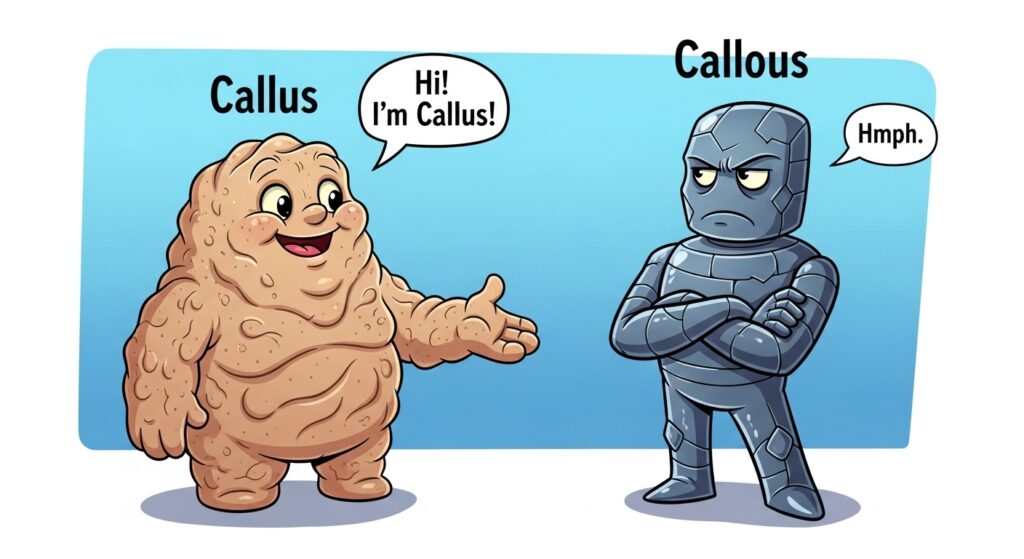
Here’s a story I love: a young woman volunteering in a rural clinic developed calluses on her palms from washing laundry by hand daily. At first, it hurt. Then she noticed her empathy deepened, not dulled.
Contrast that with a corporate office friend, constantly navigating economically callous decisions, whose calloused heart made her avoid personal connection.
Tiny differences in our daily life shape whether our skin or our attitudes toughen. One literal, one figurative. Both hard-earned.
Practical Tips: Protecting Skin Without Becoming Callous
Because let’s be honest, we all get a lil’ of both sometimes. Here’s how to manage your hands and heart:
- Moisturize and file callused areas gently
- Rotate activities to avoid unnecessary localized thickening
- Reflect daily: “Am I becoming calloused in how I treat others?”
- Take mini empathy breaks, like volunteering or prostrating in meditation, to soften the callous edges of life
Remember, tough skin doesn’t have to mean a tough heart.
Cultural Variations: Callus and Callous Across Traditions
Different cultures celebrate toughness and sensitivity differently. In some Asian communities, children walking barefoot on gravel develop callused soles early a sign of resilience.
In Nordic countries, communal discussions on hardship discourage becoming callous, instead fostering mutual support. A quote from a retired nurse in India: “Hands may get callused, but hearts should never be. That’s the real measure of a caregiver.”
Media outlets like the Atlanta Journal Constitution and Washington Post occasionally highlight stories of social callousness, showing that while callus is universal, callousness is a societal choice.
The Psychology Behind Calloused Attitudes
Psychologists note that repeated exposure to suffering or harsh environments can make one callous. Some people develop desensitized behaviors unconsciously, like ignoring minor ethical breaches at work or being indifferent to socially libertine norms.
- Military veterans sometimes report emotional calloused responses to repeated trauma
- Children exposed to hardcore ideology may form calloused worldviews
- Routine heavy-handed force in law enforcement can foster a callous culture
Understanding this helps us intervene gently, fostering empathy while acknowledging human resilience.
Fun Misconceptions: Callus in Media

Ever notice how cartoons or comics exaggerate calluses? Heroes with exaggerated callused hands are portrayed as noble, but real calloused attitudes?
Not so heroic. Shows like Telegraph’s online features sometimes blur the line, writing about “callused hearts” while visually showing skin problems classic English oops.
Even in daily chat: “Wow, your hands are so callused” vs “Wow, you’ve become calloused” tiny letters, big difference.
Frequently Asked Questions
What is a Callous?
A callous describes a person who is emotionally insensitive or indifferent to the feelings of others.
What is a Callus?
A callus is a thickened and hardened area of skin, usually caused by repeated friction or pressure.
Callous vs Callus: Key Difference
The main difference is that callous refers to a personality trait, while callus refers to a physical skin condition.
Examples of Callous in a Sentence
He was so callous that he didn’t care when his friend was upset.
Examples of Callus in a Sentence
Guitarists often develop calluses on their fingertips from frequent practice.
read this blog :grammarist.com/usage/callous-callus/
Conclusion: Walking Barefoot Between Skin and Soul
The callus on your hand tells one story: dedication, effort, experience. The callous in your attitude tells another: resistance, fatigue, or sometimes indifference. Both are part of being human, but only one you can consciously soften.
Think of it like walking barefoot across a meadow you’ll get calluses, sure, but you can keep your heart soft if you notice the world around you.
Next time you hear “callus” or “callous,” pause. Feel the skin, sense the soul, and remember: life is full of friction but friction doesn’t have to harden everything it touches.
- Share your stories: did you ever form calluses from life’s work? Or become calloused from emotional strain?
- Try a small act today to soften a calloused edge, literal or figurative.
- Teach kids the difference: scrub their hands gently, but remind them to keep hearts tender.
At the end of the day, callus and callous aren’t enemies they’re signposts. One points to physical endurance, the other warns of emotional neglect. Together, they tell the story of human life: messy, gritty, tender, and unavoidably fascinating.