
You ever sat at a café, watching the rain dribble down the windows, and suddenly thought about all the little verbs you’ve ever used in your life? Yeah, maybe not in that exact moment, but for me, it happens when I think of Comer.
Like, literally… imagine a plate of paella in front of you, steaming hot, the smell kinda wraps around your brain, and then you realize “hey, I comí, I comía, I have eaten, I was eating…” and suddenly, verbs become these tiny time machines.
Learning Spanish verbs like Comer in Preterite and Imperfect isn’t just memorizing charts or ticking boxes on a study guide. It’s about capturing life, meals, memories, and moments that slip by.
My abuela once told me, “Los verbos, mijo, they’re like tiny snapshots… each one tells a story.” And honestly, she was right. Today, we’re gonna explore Comer conjugation like you’ve never seen before messy, quirky, authentic.
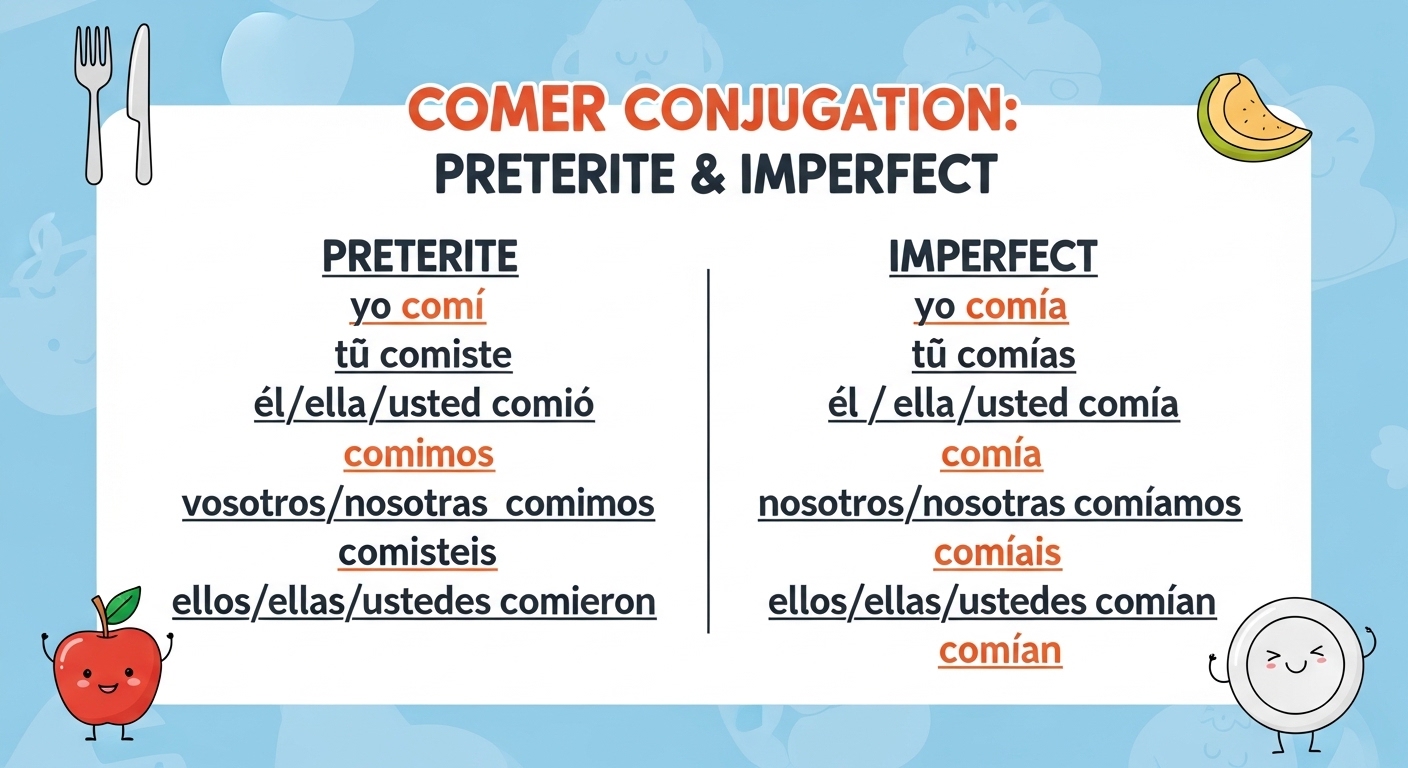
| Subject | Preterite (Past Completed) | Imperfect (Past Ongoing/Habitual) |
|---|---|---|
| Yo | comí | comía |
| Tú | comiste | comías |
| Él/Ella/Usted | comió | comía |
| Nosotros/as | comimos | comíamos |
| Vosotros/as | comisteis | comíais |
| Ellos/Ellas/Uds | comieron | comían |
Why Preterite and Imperfect Even Matter
Spanish has this magic, right? Two past tenses, almost twins but slightly different. Preterite is sharp, sudden “I ate the croissant and it was gone.” Imperfect? Smooth, lingering, like you’re tasting it slowly “I used to eat croissants every Sunday morning.”
Sometimes students get tripped up here. You might practice preterite and imperfect in context, using sentences like:
- Ayer comí demasiado helado y me dolió la panza.
- Cuando era niño, siempre comía con mis abuelos los domingos.
See the vibe? One is done, one is habitual. And yes, Comer is regular, so it follows the patterns neatly, which is a blessing in disguise.
Comer in the Preterite: The Sharp Moments
Let’s start with the Preterite past events that have a clear ending. Think fireworks, birthday cakes, meals that happened once.
- Yo comí paella en Valencia una vez y juro que mi corazón todavía late más rápido al recordarlo.
- Tú comiste tanto chocolate que parecía que estabas desafiando leyes de física.
- Él/Ella/Usted comió como si fuera un festín de reyes.
- Nosotros comimos tacos en la calle y el viento nos llevó la servilleta.
- Vosotros comisteis demasiado rápido y alguien terminó con salsa en la camisa.
- Ellos/Ellas/Ustedes comieron bajo la lluvia, y les juro, eso se siente en la memoria más que en la barriga.
Notice how each sentence tries to capture a little story, a moment. That’s the essence of preterite: precise, almost photographic. And if you’re prepping for CLEP Spanish Language Levels 1 and 2 or Spanish 105, these examples stick better than any rote memorization.
Comer in the Imperfect: The Long, Slow Feels
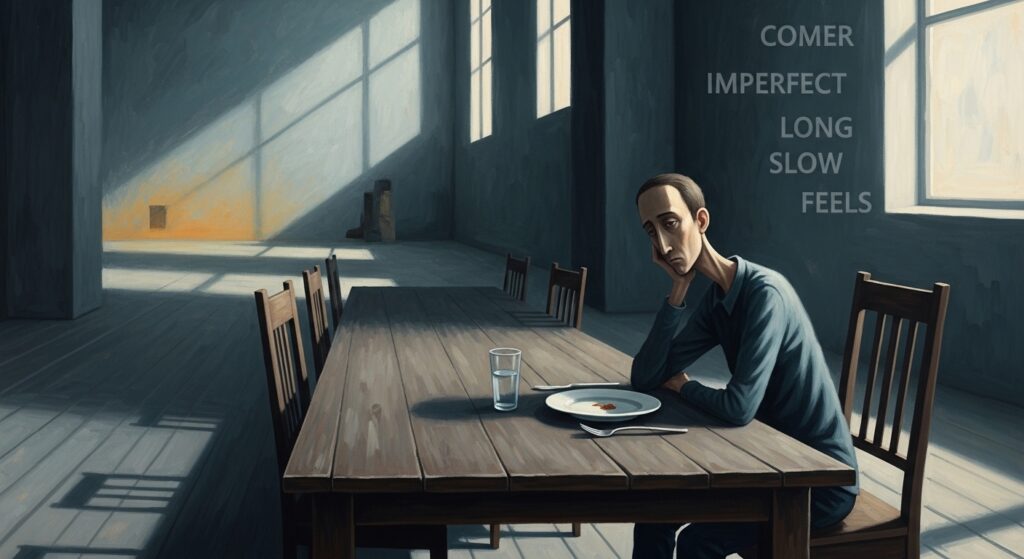
Now let’s swirl into Imperfect. This is the cozy, Sunday-morning vibe. Past actions without strict endpoints, habits, repeated experiences.
- Yo siempre comía pan con tomate antes de ir al cole.
- Tú comías mientras escuchabas música de los años 80 y nadie te molestaba.
- Él/Ella/Usted comía lento, disfrutando cada bocado, como quien contempla un cuadro.
- Nosotros comíamos juntos en la plaza, viendo pasar las nubes.
- Vosotros comíais siempre en ese café pequeñito donde el dueño te saludaba por tu nombre.
- Ellos/Ellas/Ustedes comían historias, no solo comida; cada almuerzo era un cuento.
The Imperfect is poetic. It’s the tense of memory, nostalgia, life lived in small doses. It’s invaluable for sentence meaning and understanding subtle verb forms in real life.
Mixing It Up: Preterite vs. Imperfect
Here’s the trickiest bit, and also the most fun. Imagine these two in one paragraph:
“Cuando llegué a casa, mi hermano ya comía su helado favorito, y yo comí una galleta mientras lo miraba.”
Boom. Imperfect sets the scene, Preterite punctuates the action. This is gold for practice preterite and imperfect in context exercises. Also, when you’re prepping for CTEL 1 – Language & Language Development (031) or CLEP Spanish, this kind of naturalistic usage beats any dry chart memorization.
Authentic Sentences and Mini-Stories
Here’s where it gets personal. Imagine your life as a series of Comer moments:
- Esa vez que comimos juntos en un picnic improvisado, y un perro decidió unirse a la fiesta.
- Cuando era niño, siempre comía helado los sábados y soñaba que podía volar con cada cucharada.
- Anoche, comí ramen mientras leía tu novela favorita, y me sentí un poquito menos solo.
Tiny memories like these help lock the formal/informal (singular/plural) distinctions in your head naturally. Grammar stops being abstract.
Tips for Memorizing Comer Conjugation
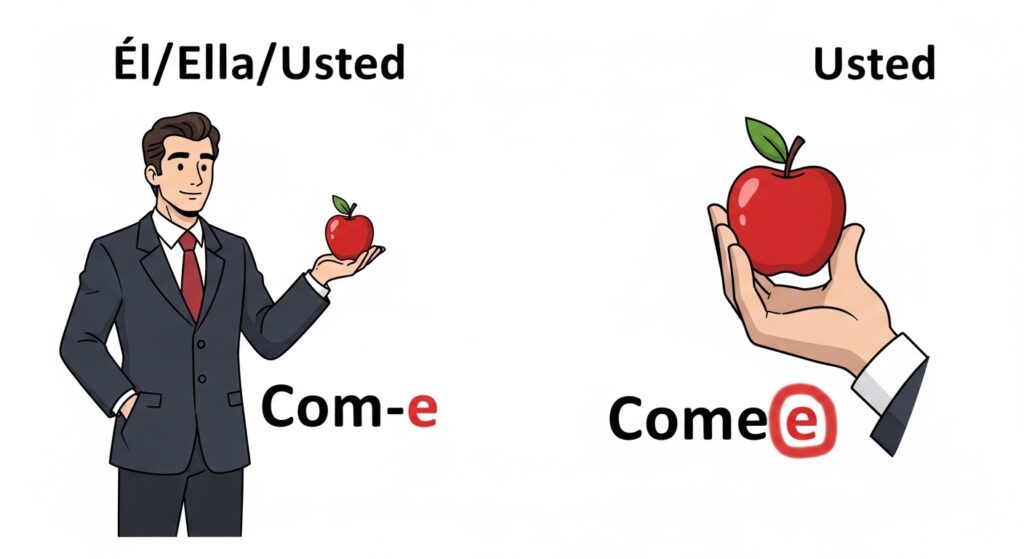
- Flashcards with charts, yes, but also try doodling your meals. Draw “yo comí pizza” and it sticks.
- Record yourself speaking, narrating your day, sprinkling preterite and imperfect verbs.
- Try contextual practice: narrate your week like a mini-journal in Spanish.
- Mix verbs: abrir, conducir, conseguir, correr, and comer in small stories. It’s surprisingly fun.
Practical Exercises for Mastery
- Rewrite your last dinner in preterite, then again in imperfect. Feel the difference.
- Swap yo comía with nosotros comíamos. Notice how perspective changes the story.
- Turn each preterite sentence into a question: “¿Tú comiste tacos ayer?” your grammar brain lights up.
- Practice command forms: “¡Come la sopa!” vs. “No comas demasiado.” Useful for real-life interaction.
Cultural Anecdotes and Stories
Across Spanish-speaking cultures, Comer isn’t just a verb it’s ritual, celebration. In Mexico, during Día de los Muertos, families comían juntos, plates of pan de muerto disappearing faster than candles burned.
In Spain, tapas nights turn comer into a communal dance, stories interwoven with bites of tortilla. French cafés cherish slow meals, the imperfect perfectly fitting: “Nous mangions pendant des heures en parlant de tout et rien.”
Even in teaching contexts, I’ve seen students in ESL (English as a Second Language) classes light up when they conjugate Comer while telling a mini-story about their breakfast. Trust me, it works.
How to Write Your Own Sentences
- Pick a meal you love. Think about when you ate it. Is it preterite or imperfect?
- Add characters. Did your friends, pets, or family join?
- Sprinkle other verbs: abrir, tomar, divertirse, viajar.
- Make it messy, real, alive grammar is best learned in the chaos of life.
Frequently Asked Questions
comer preterite conjugation
The preterite conjugation of comer is: yo comí, tú comiste, él/ella/usted comió, nosotros comimos, vosotros comisteis, ellos/ustedes comieron.
comer past tense
In Spanish, the past tense (preterite) of comer is: comí, comiste, comió, comimos, comisteis, comieron.
comer preterite tense
Comer in the preterite tense follows regular -er endings: comí, comiste, comió, comimos, comisteis, comieron.
comer in preterite
For comer, the preterite forms are: yo comí, tú comiste, él/ella comió, nosotros comimos, vosotros comisteis, ellos comieron.
comer in the preterite
The preterite of comer is: comí, comiste, comió, comimos, comisteis, comieron.
Read this Blog: https://marketbellione.com/despertarse-conjugation/
Conclusion: Making Past Tense Delicious
So, there it is. Comer conjugation in preterite and imperfect, but wrapped in stories, smells, memories, and tiny messy human moments. Don’t just cram charts. Eat them, taste them, remember them. Grammar becomes a companion, not a task.
Next time you say “yo comí” or “yo comía”, picture your plate, the people around you, the laughter, the crumbs, the rain, the café. That’s Spanish. That’s life. That’s how a simple verb turns into a universe.
And hey, share your own Comer moments below the weird, the cozy, the hilarious. Let’s make grammar a story we all live, not just a test we take.