
Soo… you wanna tell a story. Not just any story, like the kind you murmur over coffee, but the kind that lingers, sneaks into dreams, and makes readers say “wow, I didn’t see that coming.”
I remember sittin’ by my tiny desk, scribbling ideas on scraps of paper, coffee cup teetering on the edge, thinking how do i even begin? That’s where story outlining comes in, a map before the treasure hunt, a whisper from the universe telling you “yes, your story can exist.”
There’s magic in plotting a story from scratch, in shaping a narrative that feels alive. And lemme tell ya, it’s not about rigidity it’s about finding the heartbeat of your tale before it runs away.
In this article, we’re diving deep into ways to outline a story, exploring frameworks, quirky techniques, and ways to coax your characters into life, all the way from that very first idea to a finished draft that makes your chest tighten with pride.
We’ll sprinkle in examples from beloved classics, nods to storytelling legends like J. R. R. Tolkien, and yeah, maybe a few clever tricks that’ll make your writer brain light up.
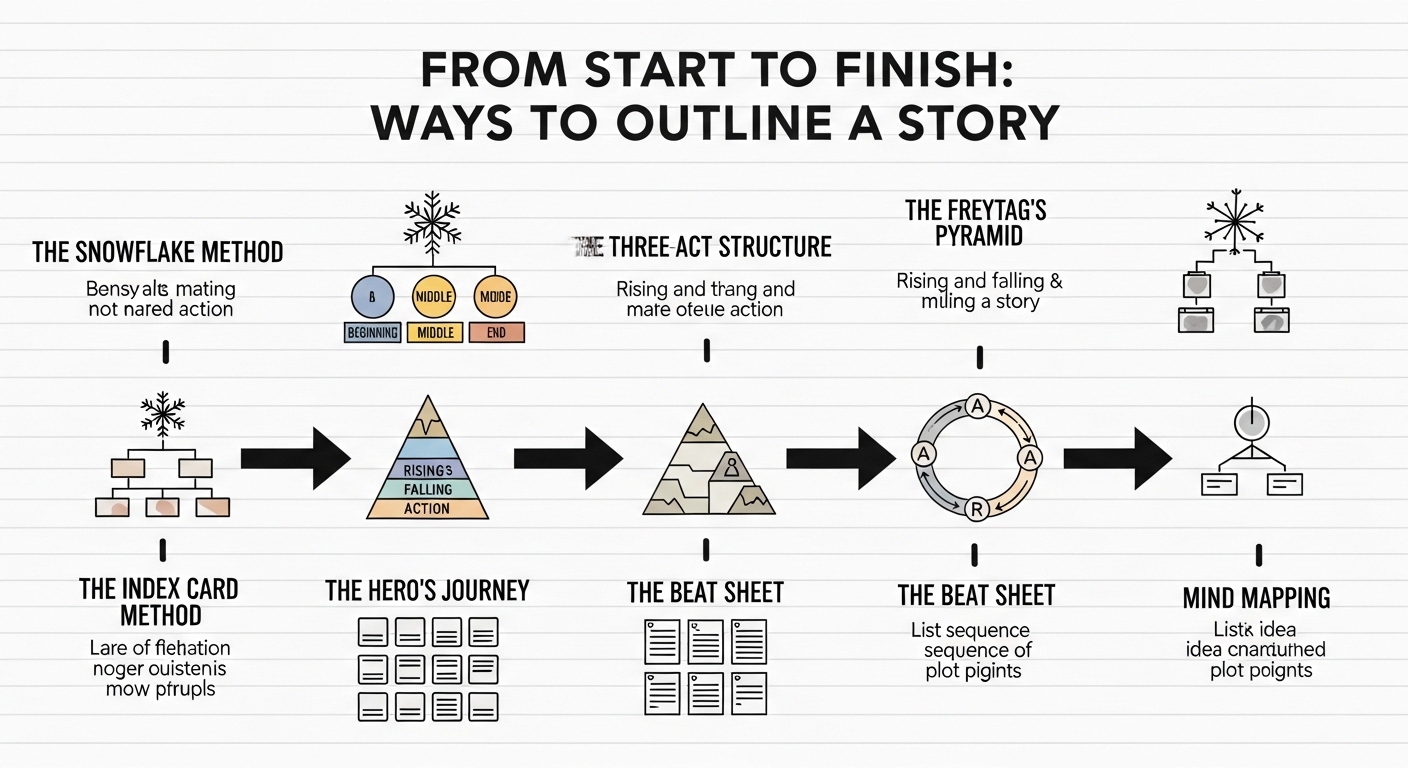
| Method / Framework | Focus / Purpose | Best For |
|---|---|---|
| Three-Act Structure | Classic setup: exposition climax resolution | Plotting overall story arc, pacing, and major beats |
| Freytag’s Pyramid | 5-part drama structure: exposition climax resolution | Stories with dramatic tension and clear rising/falling action |
| Scene & Sequel Method | Scene goal conflict disaster reaction decision | Micro-level pacing, multiple POVs, subplot integration |
| Snowflake Method | Expanding single sentence paragraph full novel | Big ideas that need detailed story planning |
| Save the Cat Story Beats | Beat-driven approach to highlight key story events | Commercial storytelling, character-driven arcs |
| Hero’s Journey | Archetypal journey: call to adventure trials return | Epic adventures, character transformation focus |
| Character Profiles & Arcs | Map traits, backstory, motivation, arc | Strong character development & consistent decisions |
| Step Outline / Beat Sheet | Short scene summaries, key beats | Drafting, pacing, and tracking narrative tension |
| Multi-page Synopsis | Full story summary with plot and subplots | Agent submissions, big-picture story structure |
Why Outlining Matters (Even If You’re a “Pantser”)
So, maybe you’re thinking meh, I like writing by the seat of my pants. Totally fine. But here’s the thing, even pantser types benefit from a skeleton.
Imagine trying to build Bag End without a blueprint sure, you can sketch it freehand, but somewhere, a hobbit-sized door will end up crooked, or worse, you’ll forget where the pantry is.
A story outline gives you:
- A clear vision of your story structure before you dive into chaos.
- Confidence to explore subplots without losing track of the main arc.
- A cheat sheet for pacing, so your narrative tension builds instead of fizzles.
- Tools to map your protagonist’s character arc and keep the antagonist’s schemes juicy.
Authors like Randy Ingermanson swear by the Snowflake Method, turning a single sentence into a full-blown novel, step by step. Meanwhile, Blake Snyder’s Save the Cat structure teaches beats like a drumline, and suddenly, your story isn’t just floating it’s marching.
Core Methods to Outline a Story
When it comes to plotting, writers have a buffet of methods. Here’s some of the tastiest ways to outline a story that won’t leave your brain soggy.
1. The Three-Act Structure: Your Classic Roadmap
The old reliables… act one, act two, act three. Think exposition, rising action, climax, and the inevitable resolution. It’s like building a bridge: foundations, span, and then the glorious final arc over water.
- Start with a hook that grabs the reader, sets up the inciting incident.
- Plot your midpoint a revelation, a betrayal, or a talking dragon if you’re doing Tolkien-level epic.
- Build to the pre-climax, then drop your characters into decisions that shape their character motivation.
- Resolve the threads. Maybe the protagonist wins, maybe they learn. Either way, structure keeps the chaos poetic.
Fun fact: In The Hobbit, Tolkien nails this Bilbo’s journey follows three acts without him ever realizing he’s adhering to a formula.
2. Freytag’s Pyramid: Drama’s Swiss Army Knife
Gustav Freytag would probably sit you down, hand you a triangle, and say, “Here, see your plot in 5 parts.”
- Exposition: Welcome to Middle-earth or Lake Town.
- Rising Action: Thorin, Gandalf, trolls… chaos ensues.
- Climax: Smaug! Smaug! Smaug!
- Falling Action: The dust settles, armies march, friendships are tested.
- Resolution: Bilbo heads back to Bag End, life slightly altered, story done.
Use this if you want a plot outline that looks simple on paper but gives your narrative layers to play with.
3. Scene and Sequel Method: The Microscope Approach
Wanna get tiny with your story beats? Break everything down into scenes: goal, conflict, disaster, reaction. Then follow with sequels, where characters digest what happened and make decisions.
- Makes pacing smooth.
- Keeps narrative tension consistent.
- Helps your subplot breathe without overwhelming your main arc.
This method is a lifesaver if you’re juggling multiple POVs or massive worlds, like Rivendell or Hobbiton.
4. The Snowflake Method: From Tiny Idea to Full Novel
Start with a one-sentence summary. Then… snowflake it:
- Expand the sentence to a paragraph.
- Develop character profiles.
- Create multi-page synopses for each subplot.
- Keep expanding until your writing workflow practically writes itself.
It’s great for story planning, especially when you’ve got ideas spilling everywhere but no sense of order.
Outlining Techniques for Character Development
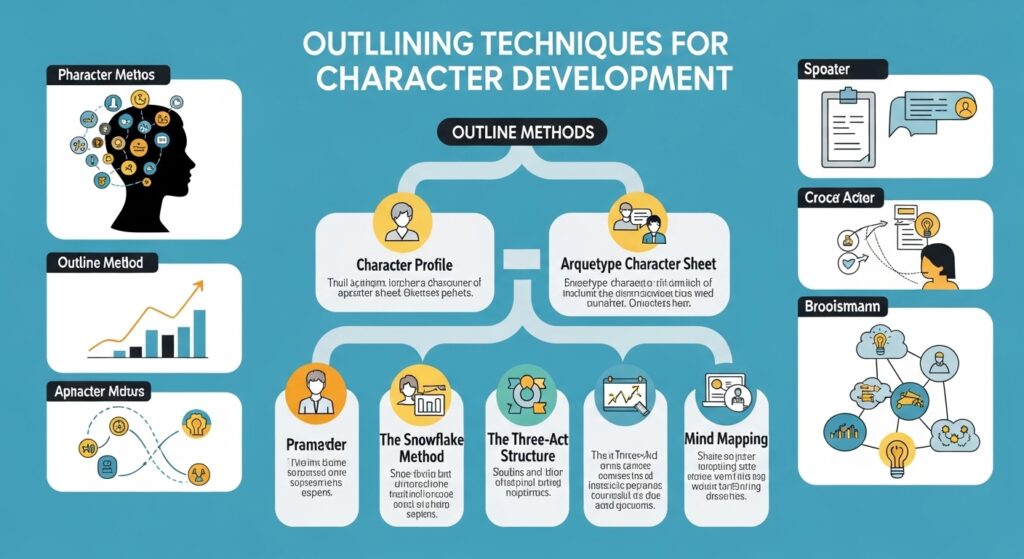
Plot’s sexy, but let’s be real characters sell stories. A story outline without rich characters is like a cake without frosting. Here’s how to give your protagonists and antagonists some bite.
Character Profiles & Backstories
- Write a mini-biography for each major character.
- Include quirks, fears, character traits, and desires.
- Consider their motivation at each plot point why would Gandalf even bother?
Character Arcs & Transformation
- Map the protagonist journey: where they start emotionally vs. where they end.
- Think subplots: allies grow, enemies falter, minor characters shine unexpectedly.
- Example: Gollum’s character arc is tragic, small but ripples through the entire narrative structure.
Interweaving Subplots
- Every subplot should feed into the main story.
- Check story pacing don’t let side plots eat all the narrative energy.
- Mini-climaxes within subplots heighten overall tension.
How to Outline a Story Using Plot Frameworks
If you’ve ever thought frameworks are boring, think again. They’re like scaffolding for your imagination.
Save the Cat Story Beats Explained
- Opening image: Where’s your world, your Hobbiton, your small-town chaos?
- Theme stated: What’s the story really about? Courage, friendship, revenge?
- Fun and games: The part where weird stuff happens Gandalf popping in, treasure hunting.
- Midpoint: Stakes double. Antagonist moves. Hero wobbles.
- Finale: Wrap it up in a way that honors your setup.
Hero’s Journey Story Structure Guide
- Ordinary World Call to Adventure Refusal Mentor Appears Trials Climax Return.
- Works for epics like The Hobbit, urban fantasies, or even romance novels.
- Ensures your protagonist faces challenges that are emotionally satisfying.
Freytag Pyramid Plot Structure
- Ideal for drama-heavy stories or stories with a plot arc you want to analyze visually.
- Use it with story outlining methods to check your rising action and falling action balance.
Practical Tips for Your Writing Outline
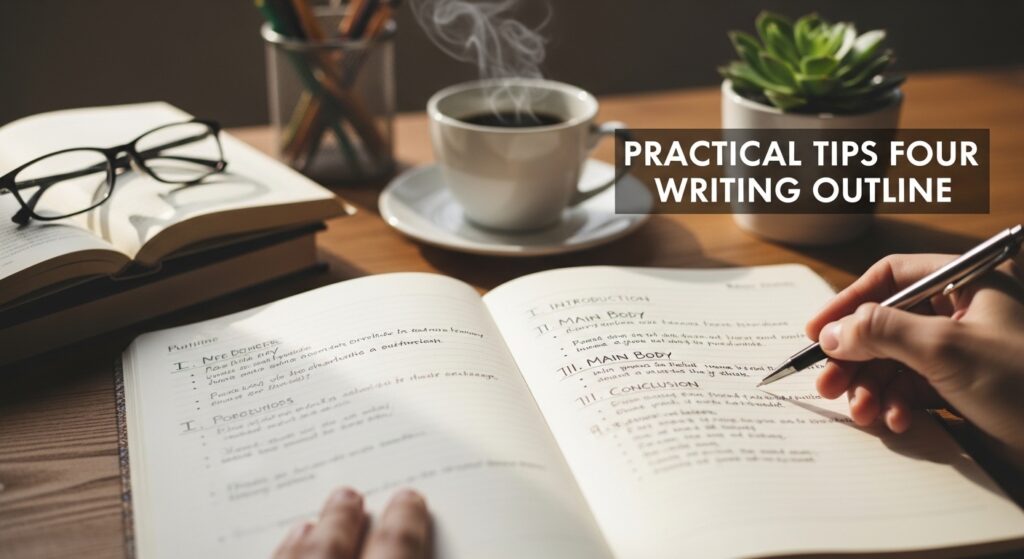
- Don’t be a perfectionist outlining process is iterative. Sketch, tweak, repeat.
- Mix frameworks. Use Three-Act Structure for the spine, Scene and Sequel for flesh.
- Keep a “what if?” notebook sudden ideas can be added as subplots.
- Color-code your story beats: exposition in blue, climax in red, resolutions in green. Visual cues help your brain.
- Include mini-deadlines NaNoWriMo preparation works best when broken into weekly writing workflow targets.
Making Your Outline Work: From Paper to Screen
- Draft a step outline: short summaries of each scene, 1–2 sentences max.
- Write a beat sheet: track dramatic tension, character decisions, stakes.
- Consider a multi-page synopsis if you’re pitching. Agents love seeing the story structure clearly.
- Don’t forget scene mechanics: goal conflict disaster reaction decision. This is how you maintain pace without forcing it.
Frequetnly Asked Questions
story outline
A story outline is a structured plan that summarizes the main events, characters, and themes of a story before writing it.
plot outline
A plot outline highlights the sequence of key events in the story, showing how the conflict develops and resolves.
outlining a story
Outlining a story involves breaking it into sections like beginning, middle, and end, and noting important scenes and character arcs.
story outline example
An example could include a brief summary of the protagonist, the main conflict, key events, and the story’s resolution.
how to outline a story
To outline a story, start with your main idea, define characters, plot major events, and organize them chronologically or by acts.
Read this Blog: https://marketbellione.com/poems-worth/
Final Thoughts: Story Outlining as a Creative Ritual
Outlining isn’t a chore it’s a ritual. Like lighting a candle before writing, it’s a signal to your brain: “okay, time to play, but also plan.” By combining storytelling frameworks, character development techniques, and narrative planning, you’re not just preparing to write—you’re inviting your story into the world fully formed, ready to leap off the page.
Remember, even Tolkien likely sketched ideas before Bilbo Baggins wandered into Lonely Mountain. Every map, every framework, every quirky sticky note you use is part of your writing outline toolkit. And the best part? There’s no single “right” way. Combine outlining techniques, mix methods, let subplots dance, and characters breathe.
If you take one thing from this, let it be this: a solid outline transforms chaos into thematic storytelling magic. Now, grab a notebook, pick a framework, and let your story start to live. And hey, share your favorite method or weirdest outline trick in the comments—let’s geek out over story planning together.
After all, every tale, every hero, every protagonist was once just a scribble in someone’s notebook. Yours could be next.