
Some stories arrive loud. Others sneak in like a shy cat that sorta just… sits in your brain until you notice it. I remember the first time I tried writing a long story, years ago, notebook on my lap, tea getting cold, absolutely no clue where the plot was going.
Characters walked around aimlessly like tourists without Google Maps. That’s when I first heard about story outlining this odd little idea that before you write the story… you kinda map it. Not perfectly, not rigidly, just enough that your imagination doesnt wander off into a narrative desert.
Writers everywhere novelists, bloggers, screenwriters, even people scribbling short bedtime tales use outlines as a narrative roadmap. It’s part planning, part dreaming. And honestly, its also a bit messy. Even legendary authors studied narrative structure, whether they admitted it or not.
Take the beloved novel The Hobbit by J. R. R. Tolkien. On the surface it feels whimsical and spontaneous, but underneath? Oh there’s a very neat plot structure ticking quietly along. From Bilbo Baggins leaving Bag End to confronting Smaug near The Lonely Mountain, the story beats line up almost suspiciously well.
So today we’re walking through different ways writers outline stories from classic frameworks to scrappy napkin sketches. If you’re someone trying to understand how to outline a story, pull up a chair. This might get interesting.
| Outline Method | Creator / Origin | Key Idea | Best For | Basic Structure |
|---|---|---|---|---|
| Three-Act Structure | Classical storytelling | Divides the story into beginning, middle, and end | Novels, films, TV | Setup Rising Action Climax & Resolution |
| Save the Cat Beat Sheet | Blake Snyder | Uses specific story beats to guide pacing | Screenwriting, commercial fiction | Opening Image Catalyst Midpoint All Is Lost Finale |
| Snowflake Method | Randy Ingermanson | Expands a story from one sentence to a full outline | Novel planning | Sentence Paragraph Character details Scene list |
| Freytag’s Pyramid | Gustav Freytag | Focuses on the narrative arc of tension | Classic literature, drama | Exposition Rising Action Climax Falling Action Resolution |
| Hero’s Journey | Mythic storytelling model | Follows the hero’s transformation | Fantasy, adventure stories | Call to Adventure Trials Transformation Return |
| Scene & Sequel Method | Fiction writing technique | Alternates action and reaction scenes | Character-driven stories | Goal Conflict Disaster Reaction Decision |
Why Story Outlining Is Basically a Map for Your Imagination
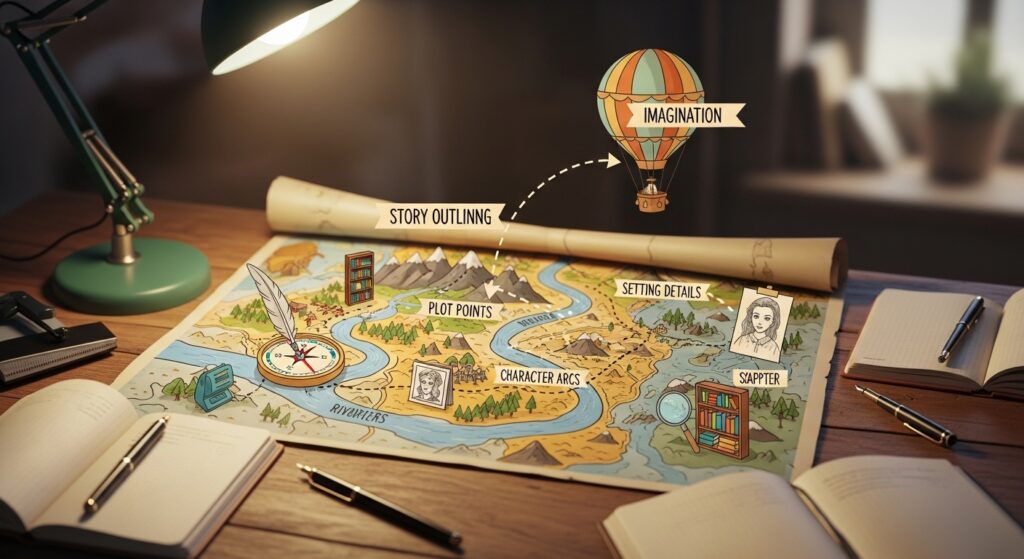
Think about wandering through a massive forest with no path. That’s writing without any story framework. Fun at first… then suddenly you’re lost, wondering why your protagonist is arguing with a goat in chapter fourteen.
Outlining creates narrative cohesion. It helps you see where the protagonist, antagonist, and conflict are heading before you actually write thousands of words. The process also improves narrative pacing, because you can feel where tension rises or drops.
Writers often say outlining does a few magical things:
• It clarifies the inciting incident, that moment where the story truly begins
• It highlights the turning point that pushes the protagonist into deeper trouble
• It helps shape believable character development techniques
• It keeps track of subplots and character relationships
• It organizes plot development before drafting chaos happens
• It prevents saggy middle chapters (those are sneaky)
• It strengthens the resolution of conflict so the ending feels earned
• It creates a clean writing workflow from idea to finished manuscript
Honestly, outlining doesnt cage creativity the way people fear. Instead it frees your brain. When the skeleton exists, the storytelling muscles can stretch properly.
How to Outline a Story Using the Three-Act Structure
The Three-Act Structure is probably the most recognizable storytelling framework in fiction and film. It’s been used for centuries, long before screenwriting manuals and writing courses showed up.
The concept is simple-ish, though writing it well isnt always simple.
Act One sets up the setting, characters, and that fateful inciting incident. In The Hobbit, that moment arrives when Gandalf recruits Bilbo Baggins for an adventure. Suddenly the peaceful hills of Hobbiton feel very far away.
Act Two expands the journey. Here the rising action grows thicker and more dangerous. Bilbo and the dwarves meet trolls, goblins, riddles with Gollum, and many uneasy nights near Lake-town.
Act Three delivers the climax and the final resolution.
When writers outline with this structure, their planning notes might include ideas like:
• Opening image that establishes the ordinary world
• A dramatic inciting incident that disrupts normal life
• Early conflict that forces the protagonist to act
• Rising complications that raise dramatic tension
• A midpoint shift where stakes suddenly feel bigger
• A dark moment where failure seems possible
• The climax, where the core problem explodes
• The emotional or thematic resolution
It’s simple enough to sketch on a sticky note, but powerful enough to support entire novels.
A Fun Way to Outline a Story: The Save the Cat Beat Sheet
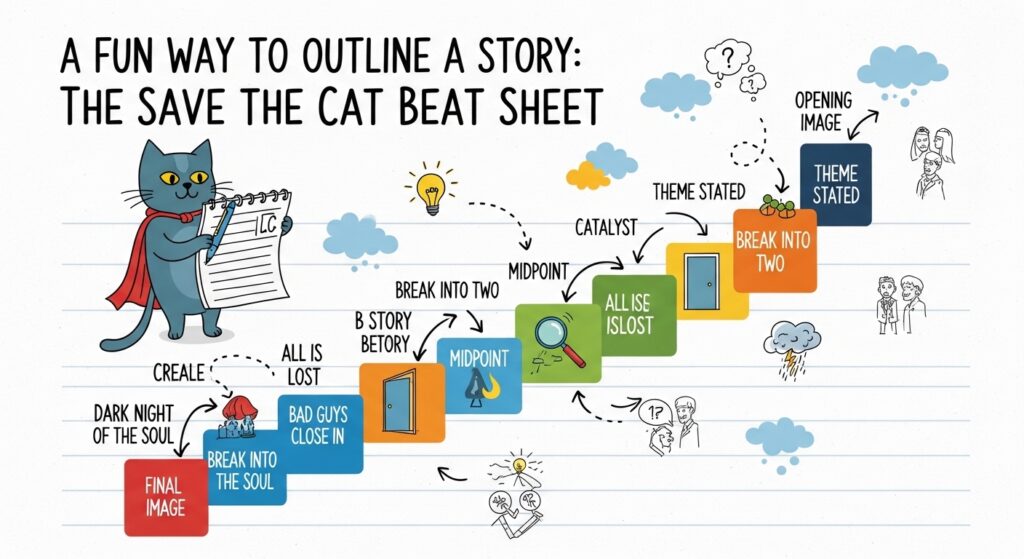
Screenwriter Blake Snyder created the Save the Cat Beat Sheet, which honestly sounds like an animal rescue plan but is actually a detailed story structure template used widely in Hollywood.
The idea is that every strong narrative has specific story beats at predictable moments. The outline becomes a sequence of emotional events rather than just plot steps.
Writers who use this plot outlining method usually include beats like:
• Opening Image showing the protagonist’s life before change
• Theme Stated someone hints at the deeper message
• Set-Up introducing relationships and character motivation
• Catalyst that launches the real problem
• Debate where the hero hesitates (people do that, y’know)
• Break into Act Two when the journey officially begins
• Fun and Games section exploring the story’s concept
• Midpoint twist shifting the direction of the narrative
• All Is Lost moment where hope crashes a bit
• Finale where the hero grows and resolves the central conflict
When applied to The Hobbit, you can almost see the beats playing out as Bilbo moves from reluctant burglar to courageous hero. Its kinda satisfying once you notice it.
This method is especially popular in screenplay beats, movie script outline planning, and modern genre fiction.
The Snowflake Method: Growing a Story from One Sentence
If you’re someone who likes order well, semi-order then the Snowflake Method created by Randy Ingermanson might feel oddly comforting.
The idea is that stories grow outward like snowflakes. You start tiny, then expand.
The process looks roughly like this:
• Write a single sentence summarizing the story
• Expand it into a short paragraph with beginning, middle, and end
• Develop detailed character backstory for major characters
• Expand the paragraph into a page describing key events
• Break the events into chapter planning outlines
• Add subplots and deeper character transformation moments
• Expand each chapter into scenes
What I like about this technique personally is how it encourages patience. You’re not rushing into a messy draft. You’re slowly constructing a narrative planning blueprint.
It also works beautifully for large fantasy worlds like Middle-earth where worldbuilding can get complicated pretty fast.
Freytag’s Pyramid and the Classic Narrative Arc
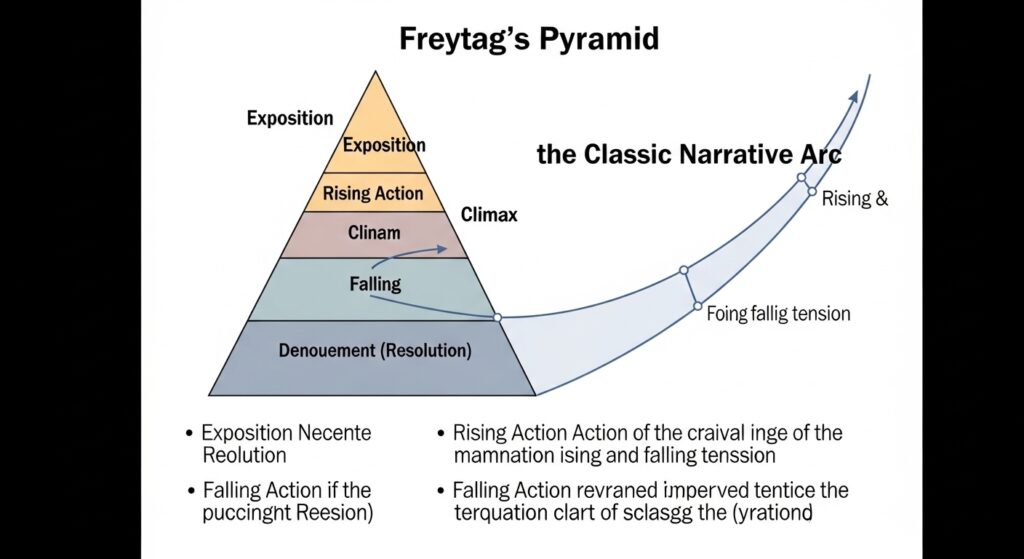
Long before modern writing guides existed, German novelist Gustav Freytag studied dramatic storytelling and created what we now call Freytag’s Pyramid.
Imagine a triangle representing the narrative arc.
At the base you have exposition, where the world and characters are introduced. The middle climbs upward through rising tension and conflict. At the very peak sits the climax. After that the story slopes downward into falling action and finally the resolution.
Writers outlining with this method often track emotional intensity across the story:
• Introduction of protagonist and setting
• A triggering inciting incident
• Rising challenges increasing tension
• Midpoint complications deepening stakes
• The central climax where everything collides
• Falling action showing consequences
• Final resolution of conflict
Its surprisingly elegant. And even modern cinematic storytelling often follows this centuries-old shape without realizing it.
Scene and Sequel Method: A Practical Way to Outline a Story
Now here’s a technique that feels very… writerly.
The Scene and Sequel Method breaks storytelling into alternating parts:
Scene = action
Sequel = reaction
This rhythm creates believable emotional flow.
A scene typically includes:
• A character goal
• An obstacle or opposition
• A disaster or complication
Then comes the sequel, where characters process what happened:
• Emotional reaction
• Logical reflection
• Decision about the next step
This cycle repeats throughout the story, forming a powerful story progression engine.
If you look closely at adventures across Rivendell or the journey toward The Lonely Mountain in The Hobbit, you’ll see this pattern happening again and again. Action… reflection… decision… action again.
It feels natural because thats basically how humans experience life.
Using Character Arcs While Outlining
A plot outline without character growth is like a road trip without scenery. Technically you’ll arrive somewhere, sure, but the journey feels empty.
Strong outlines track the character arc alongside the events of the story.
When outlining, writers often ask questions like:
• What does the protagonist believe at the beginning?
• What internal conflict shapes their decisions?
• What relationships challenge or support them?
• How does the antagonist pressure their weaknesses?
• What moment forces them to change?
• What lesson do they finally understand?
• How does the ending prove their character transformation?
Bilbo’s arc in The Hobbit is a lovely example. He begins as a timid homebody and slowly becomes brave, clever, and compassionate.
Plot events matter, sure but emotional evolution is what readers remember.
Flexible Story Outlining Techniques for Different Formats
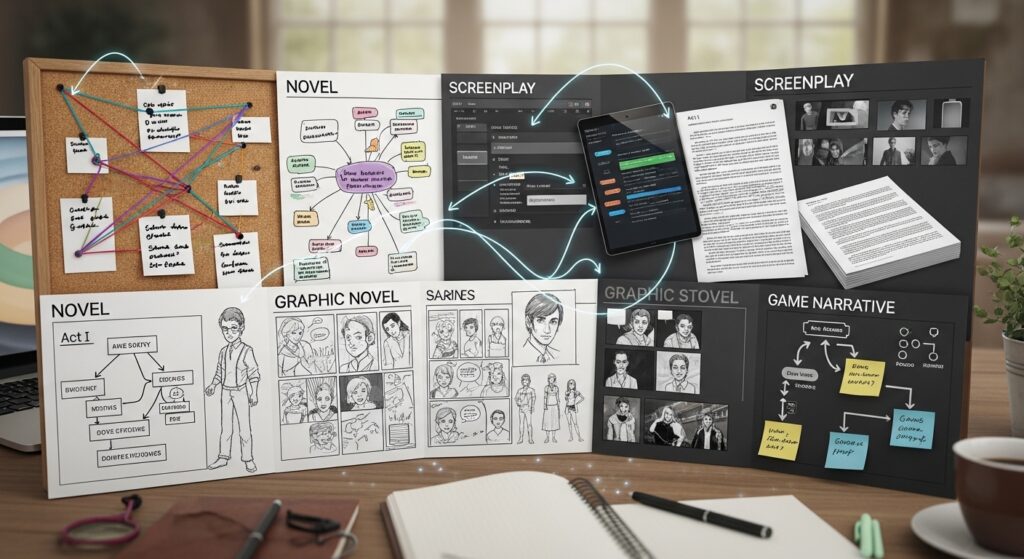
Not every writer outlines the same way. Some people prefer tidy bullet lists. Others scribble diagrams on whiteboards or, honestly, cereal boxes.
Different storytelling formats benefit from different writing process strategies:
• Novelists often create detailed chapter planning outlines
• Screenwriters rely on beat sheet structures
• Short story writers focus on one strong turning point
• Bloggers plan thematic narrative pacing across sections
• Television writers build multi-episode story arcs
• Fantasy authors emphasize worldbuilding and political subplots
• Mystery writers carefully map clues and revelations
Events like National Novel Writing Month have actually made outlining more popular because writers racing to 50,000 words need some kind of structural compass.
Otherwise… chaos happens. Fun chaos maybe, but chaos still.
Practical Tips for Creating Your Own Story Outline
By now you might be thinking, “Okay but how do I actually do it?”
Fair question.
Outlining doesn’t need fancy software or complicated charts. Often the best outlines are weirdly simple.
Try experimenting with things like:
• Writing a one-paragraph story summary first
• Listing major plot points in chronological order
• Sketching the emotional narrative arc
• Writing short notes about character motivation
• Planning where the climax will land
• Leaving room for surprises during drafting
• Revising the outline as the story evolves
One novelist once told me, laughing a little, “Outlines are promises you’re allowed to break later.” Which feels pretty accurate honestly.
Frequently Asked Questions
Story Outline
A story outline is a structured plan that organizes the main events, characters, and plot points of a story before writing begins. It helps writers maintain a clear direction and logical flow throughout the narrative.
Plot Outline
A plot outline focuses specifically on the sequence of events that drive the story forward. It highlights the key moments such as the beginning, rising action, climax, and resolution.
Outlining a Story
Outlining a story means creating a roadmap for your narrative by listing major scenes, character actions, and conflicts. This process helps writers develop ideas and maintain consistency while writing.
Story Outline Example
A simple story outline example might include the introduction of characters, the main conflict, important turning points, and the final resolution. This basic framework guides the writer through the story from start to finish.
How to Outline a Story
To outline a story, start by defining the main idea, characters, and central conflict. Then arrange the key events in order, including the beginning, middle, climax, and ending.
Read this blog; https://marketbellione.com/adjectives-for-g/
A Final Thought on the Art of Outlining
Storytelling is ancient. Long before keyboards and writing software, people shaped tales around fires, instinctively following rhythms of conflict, tension, and resolution.
Modern storytelling techniques just give those instincts names.
Whether you prefer the Three-Act Structure, the Snowflake Method, the Save the Cat Beat Sheet, or a scribbled napkin version of Freytag’s Pyramid, outlining simply helps you see the road ahead. It doesn’t replace creativity—it protects it.
So if you’re planning your next novel, screenplay, or even a tiny short story, try building a story outline first. You might discover your ideas grow clearer, your characters deeper, and your writing… oddly more playful.
And hey, if you already use a favorite plot outlining method, share it. Writers learn best from other writers’ experiments, successes, and sometimes hilarious failures too.