
You ever sat down to write somethin’ simple, like a grocery list, or instructions for a field trip, and suddenly your brain goes, “Wait… do I need a comma here? Or a semicolon? Or maybe I just toss in a colon and hope for the best?” Yeah, me too.
Lists are funny like that they look easy but somehow manage to trip up even seasoned writers. But here’s the thing: lists aren’t just a jumble of words or punctuation; they’re tiny little roadmaps for your reader’s mind.
Done right, they make your writing sparkle. Done wrong… well, you get something that reads like “milk butter eggs bread” with no clue where one thought ends and the next begins.
So let’s take a stroll, shall we? From grocery lists in Garden City, South Carolina, to lesson objectives for English teaching in Fort Worth, Texas, I’ll show you how to list things properly in a sentence.
And I promise, this won’t be the stiff, boring grammar lecture that makes your eyes glaze over. We’re talking real-life use, creative flair, and even a few laughs along the way.
| Type of List | Example | Key Tips |
|---|---|---|
| Horizontal List (simple) | Milk, eggs, butter, and bread | Use commas to separate; include “and” before the last item (Oxford comma optional but recommended) |
| Horizontal List (complex items) | Bring notebooks, pens, and pencils; water bottles, lunch, and snacks; and proper footwear | Use semicolons to separate groups of items that already have commas |
| Vertical List | – Milk – Eggs – Butter – Bread | Good for clarity; especially in emails, instructions, or memos |
| Lists in Dialogue | “Did you pack the fruit sorbets?” “Yep, grapes, melons, strawberries… oh and tartlets too.” | Makes conversation readable and natural; commas guide the flow |
| Narrative / Creative List | She walked through the Planet Play Zone, dodging toddlers with balloons, parents with coffee, and clowns with oversized shoes. | Adds rhythm, imagery, and humor; commas act like tiny beats |
| Email / Memo List | Please ensure students bring: – Notebook – Pen – Packed lunch – Water bottle | Clear, scannable, avoids confusion; use bullets for visual separation |
| Common Mistakes | Bring milk eggs butter bread | Missing commas, missing “and”, confusing grouping; read aloud to check clarity |
Why Listing Things Properly Matters
You might think, “Eh, it’s just a list. Who cares?” But the way you structure a list can change everything—clarity, flow, even the emotional punch of your writing. Imagine sending a memo that says:
Bring eggs, milk, butter bread, flour
Without proper punctuation, your reader might think you need “butter bread” as a single item. If you’re planning a bread-making class in Moab, Utah, that’s a big mistake. Or picture giving directions for a road trip from Portland, Oregon, to San Francisco, California:
Bring passport, itinerary, map snacks, drinks
See the confusion? The commas (and maybe a semicolon or colon) are heroes here.
Lists in sentences aren’t just about separating items they’re about organization, readability, and comprehension. They give your reader tiny landmarks. And sometimes, a list can even carry rhythm, humor, or emotion.
Horizontal vs Vertical Lists
First thing’s first. There’s more than one way to list. You’ve got your horizontal lists, which live right in your sentence, like:
Don’t forget the milk, eggs, flour, and yeast.
Notice that last “and”? That’s called the Oxford (serial) comma, and yes, people debate it like it’s the Space Shuttle launch. Some style guides demand it, some think it’s extra. In any case, it’s usually safer for clarity especially in a list of complex items, like:
Bring sharp cheddar cheese, jalapeno peppers, biscuits, gravy, and toast for breakfast.
Now, vertical lists? Those are your dramatic, attention-grabbing bullet points:
- Bread
- Milk
- Eggs
- Butter
They’re great for emails, memos, lesson plans, or instructions for the Student Youth Program (SYP) when you don’t want your reader to get lost in punctuation. You can even use vertical lists creatively, like to show a shopping spree in Banff, Alberta, Canada:
- Pastries
- Fruit sorbets
- Tartlets
- Chocolates
- Grapes
Vertical lists scream organization. Horizontal lists whisper efficiency. Use both wisely.
The Anatomy of a Proper Horizontal List
Let’s break it down with a story from my aunt in Orlando, Florida. She’s a wizard at holiday breakfasts and insists on perfect list structure in her handwritten recipes. She once wrote:
Make a breakfast of toast, jelly, coffee, and pastries.
Simple, yes? But then she had this gem:
For a road trip snack, pack sandwiches, ham, turkey, and vegetable finger sandwiches.
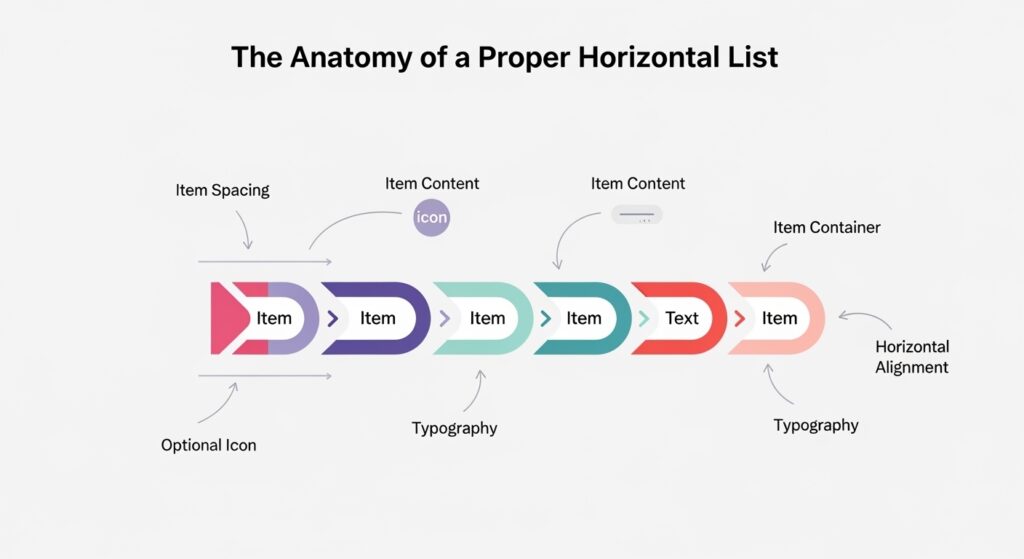
Notice how each item is clear, and the series flows naturally. Here’s the anatomy of why it works:
- Commas separate items (duh, basic but crucial).
- The last item is preceded by “and” (Oxford comma optional, clarity mandatory).
- No extra punctuation unless an item itself contains a comma, in which case you might need a semicolon:
For the picnic, bring melons, strawberries, and grapes; fruit sorbets; tartlets; and chocolates.
Boom. Now your reader won’t mix up fruit and desserts.
How to List Complex Items
Sometimes your items are a little… complicated. Maybe you’re sending instructions for a school drill in San Francisco, California, with multiple components per task:
Students must bring a notebook, pens, and pencils; a water bottle, lunch, and snacks; and proper footwear.
Each semicolon separates mini-groups, keeping everything digestible. Without semicolons, you’d end up with something like:
Students must bring a notebook, pens, and pencils, a water bottle, lunch, and snacks, and proper footwear.
…which is just asking for confusion.
The trick: ask yourself, “Would my reader have to pause to understand this?” If yes, consider semicolons or rephrasing.
Lists in Narrative Writing
Here’s where things get fun. Lists don’t have to be boring. You can use them to paint a scene or build suspense:
She walked through the Planet Play Zone, dodging toddlers with balloons, parents with coffee, and clowns with oversized shoes.
Boom. That list gives rhythm, imagery, and humor all in one sentence. Notice how the commas act like tiny drumbeats guiding the reader through the chaos. You can even sneak in a cultural or personal twist:
In Garden City, South Carolina, grandparents always bring bacon, biscuits, and gravy when visiting newborns.
The list itself becomes a story, evoking smells, sounds, and family traditions.
Creative Ways to Use Lists
- Add humor:
Things I fear more than my student failing the English test: essays without punctuation, emails with no greeting, and toast that’s burnt.
- Poetic rhythm:
The morning brought sunlight, laughter, spilled milk, and the smell of fresh bread.
- Instructional clarity:
To attend the Astronaut training experience at Kennedy Space Center, bring: certification forms, transportation dates, a list of students, and your enthusiasm.
See how the function of the list changes depending on your purpose? Always ask: Am I writing to entertain, instruct, or both?
Common Mistakes (and How to Avoid Them)
I see this a lot, especially in student engagement exercises:
- Missing commas: “Bring milk eggs butter bread.” Disaster.
- Mixing punctuation styles: “Bring milk, eggs; butter, bread.” Confusing.
- Forgetting the last conjunction: “Bring milk, eggs, butter.” Sounds abrupt.
A tip: read your sentence out loud. If you stumble, your reader will too. Adjust punctuation or consider breaking the list into a vertical format.
How to List Items in Emails and Memos
Lists aren’t just for essays they’re lifesavers in emails and memos. Let’s say you’re coordinating a field trip:
Please ensure students bring:
- Notebook
- Pen
- Packed lunch
- Water bottle
Or in a quick, horizontal style:
Ensure students bring a notebook, pen, packed lunch, and water bottle.
Notice how a list can make your communication crystal clear, avoiding dozens of follow-up questions.
Using Lists to Teach Writing
If you’re into English teaching or grammar instruction, lists are gold. They show students how clauses, fragments, prepositional phrases, and coordinating conjunctions work in action. Mini-lesson:
My favorite breakfast: eggs, buttered toast, bacon; coffee, milk; and jam.
You can break down why semicolons group related items, how commas separate simpler things, and why the “and” ties the last item neatly. Students usually have that “aha!” moment when they see punctuation in context, not just as abstract rules.
Real-Life Anecdotes About Lists
- In Moab, Utah, a friend once made a packing list for a road trip that included hiking boots, sunscreen, water bottles, and a map. They forgot the sunscreen. Sunburned, but at least the rest was organized.
- A Student Youth Program (SYP) coordinator in Fort Worth, Texas, made a horizontal list for a science experiment: flour, eggs, baking soda, and baking powder. A missing comma nearly ruined the recipe.
- Grandparents in Orlando, Florida love using vertical lists when visiting a newborn, because it’s visually easier than remembering a long horizontal sentence while holding a baby.
Lists aren’t just grammar they’re survival tools for daily life.
Tips for Making Your Lists More Personal

- Add small stories: “Don’t forget the bread I swear it’s fluffier when you bake it in Moab, Utah.”
- Use humor: “Milk, butter, eggs… basically the holy trinity of breakfast salvation.”
- Include emotions: “Bring love, patience, and a lot of coffee for the new parents.”
- Think visually: vertical lists stand out; horizontal lists flow.
You can even combine lists with dialogue:
“Mom, did you pack the fruit sorbets?”
“Yep, grapes, melons, strawberries… oh and tartlets too.”
It feels real, human, and keeps the reader engaged.
Frequently Asked Questions
how to write a list in a sentence
To write a list in a sentence, separate items using commas, and use a colon before the list if it follows a complete sentence.
listing things in a sentence
Listing things in a sentence involves organizing items clearly so the reader can easily follow them, using commas, semicolons, or conjunctions as needed.
how to list things in a sentence
You can list things in a sentence by keeping items parallel, using proper punctuation, and ensuring the list flows naturally within the sentence structure.
grammar listing items
Grammar rules for listing items include using commas for simple lists, semicolons for complex items, and colons to introduce lists after complete sentences.
listing in a sentence
Listing in a sentence means presenting multiple ideas, objects, or directions in a readable format, often using commas, semicolons, or colons depending on complexity.
Read this Blog: https://marketbellione.com/duplicate-vs-duplicity/
Conclusion: Why Proper Lists Matter
When you list things properly in a sentence, you’re doing more than just following grammar rules. You’re creating clarity, guiding your reader’s eyes, and shaping their understanding.
You’re adding rhythm, humor, or drama if you want. Lists are flexible tools that can make emails clearer, recipes easier to follow, lessons more engaging, and stories richer.
Next time you sit down with a grocery list, a memo, or a novel, remember: commas, semicolons, and conjunctions are your friends. Use them wisely, and your sentences will not only make sense they’ll sparkle. And don’t forget to personalize your lists, because the best lists tell stories, capture moments, and make readers smile.
Whether you’re writing about milk, butter, eggs, bread, preparing for a bread-making class, or planning a field trip for the Student Youth Program (SYP), lists matter. They’re tiny, magical structures that hold chaos together and turn confusion into clarity.
So go on, list with joy, sprinkle a little creativity, and remember: a well-listed sentence is like a warm breakfast in Orlando, Florida, or a perfectly organized picnic in Banff, Alberta, Canada it just makes life better.