
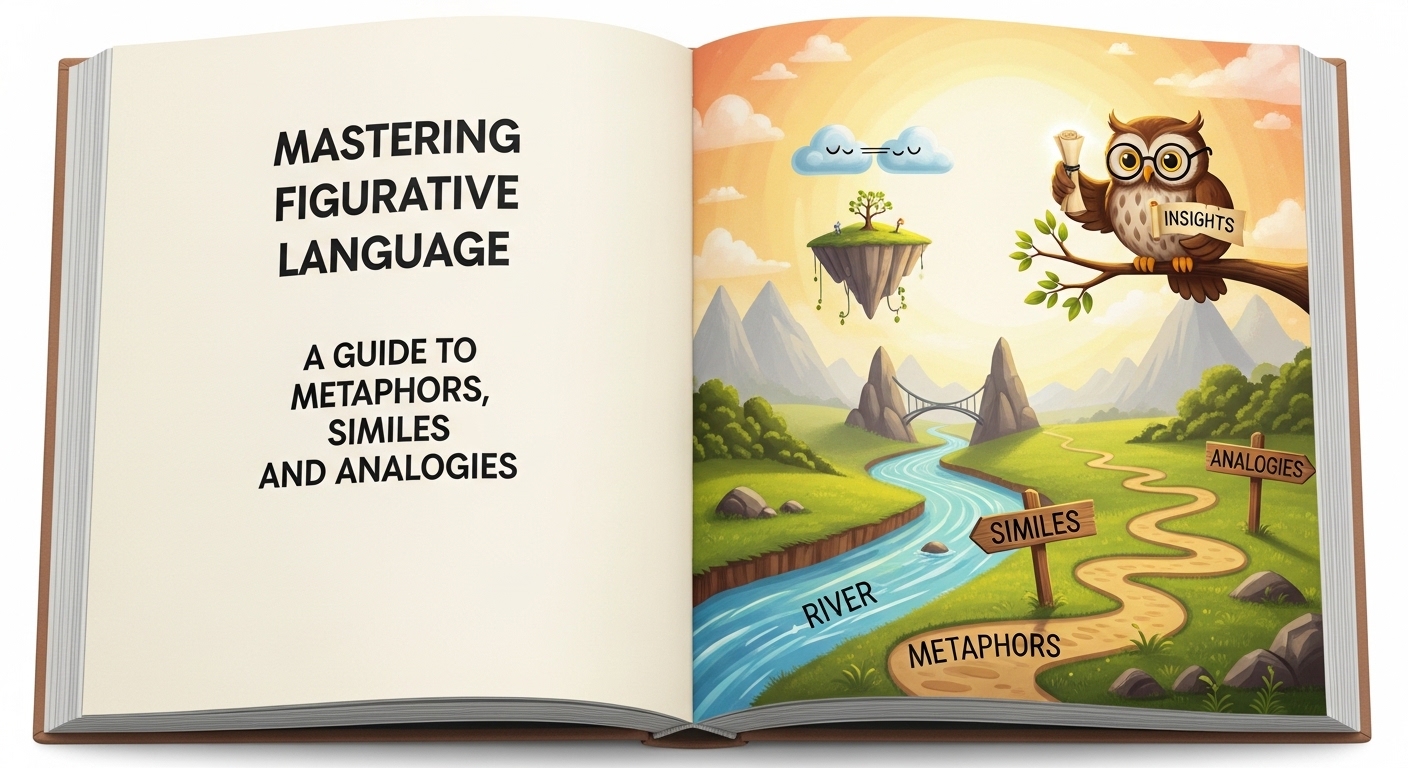
Welcoming a baby girl into the world is like seeing the first splash of pink at dawn after a stormy night unexpected, tender, and full of whispers of hope.
I remember sitting in the hospital room, holding my niece for the very first time, and thinking how small her hands were, yet how powerful their promise felt.
That moment, ephemeral as morning mist, carried with it stories I couldn’t yet tell, feelings I couldn’t yet name. Writing about such moments calls for more than literal language; it cries for figurative language, the tools that let our words hug, dance, and even sing the invisible textures of life.
Today, we’ll wander through the forest of figures of speech, focusing on metaphors, similes, and analogies, and uncover how you can wield them in ways nobody ever thought to write before.
| Figure of Speech | Definition / Key Idea | Example | Use / Effect |
|---|---|---|---|
| Metaphor | Direct comparison of two unrelated things | “Life is a journey” | Creates vivid, symbolic meaning |
| Simile | Comparison using “like” or “as” | “Her tears fell like rain” | Makes imagery relatable and tangible |
| Analogy | Extended comparison showing relational similarity | “Families as snow geese in a flooded field” | Explains complex relationships clearly |
| Idiom | Figurative expression with cultural meaning | “Bite the bullet” | Adds flavor and relatability |
| Hyperbole | Exaggerated expression | “I’ve waited a million years” | Emphasizes emotion or drama |
| Personification | Giving human traits to non-human entities | “The wind whispered secrets” | Brings abstract concepts to life |
Understanding Figurative Language: More Than Words
Sometimes, language feels like it’s trying too hard to hold our feelings in, like a river in a narrow channel. That’s where figurative language steps in.
It’s an overarching concept of non-literal expression that lets writers bend the rigid tracks of ordinary words into pathways where imagination can walk barefoot.
Within this vibrant ecosystem, figures of speech flourish literary devices that let us stretch meaning, layer emotion, and communicate the unspoken.
The most common tools here are metaphors, similes, and analogies, though the garden also grows idioms, hyperbole, and personification each adding its own perfume to writing.
- Metaphor: A direct comparison, like saying “her hands are magic,” bypassing literal truth to reveal emotional reality.
- Simile: A comparison using “like” or “as,” for instance, “her tears fell like rain,” evoking texture and movement.
- Analogy: A broader relational comparison, showing how one thing mirrors another, like families as “snow geese in a flooded field.”
Even subtle uses of personification “the sun smiled through the blinds” or hyperbole “I’ve waited a million years for this moment” allow us to magnify tiny human experiences into something epic, almost celestial.
Types of Metaphors: From the Familiar to the Unseen
Not all metaphors wear the same costume. Some are conventional, walking around in familiar patterns; others are wild, unpredictable, almost dangerous in their originality.
Knowing the distinctions is like learning the difference between a painter’s brush and a sculptor’s chisel both make art, but they carve different dimensions.
- Conventional Metaphor: Commonplace, easily recognized. Example: “Life is a journey.” Safe, comfy, but often overused.
- Creative Metaphor: Striking and original. Example: “Grief is the bird” Samantha Jean Coxall. These are sparks that surprise.
- Implied Metaphor: Suggestive, without stating the comparison directly. “She soared through her morning chores,” implying freedom and lightness.
- Extended Metaphor / Conceit: Stretches a single metaphor across multiple lines or even a whole work. Think of Romeo as a rose in Shakespeare.
- Catachresis / Mixed Metaphor: Wild blends that may clash but produce a strange, memorable effect. Example: “He plowed the waves of his thoughts into a brick wall of reality.”
- Abstract Metaphor: Complex, often philosophical. “Light is knowledge” or “Time is a river” the latter evoking Marcus Aurelius’s wisdom.
Each type has its place, and mastering them is like learning which spices bring out the soul of a dish. Too little, and your writing tastes bland; too much, and it becomes overwhelming.
Metaphor Examples That Stick

Sometimes, examples are all it takes for understanding to crystallize.
- “Her hands are magic” everyday ordinary fingers, yet they create wonder.
- “Life is a journey” classic but versatile.
- “Hope is the thing with feathers” Emily Dickenson. A delicate, persistent hope that sings.
- “Grief is the bird” Samantha Jean Coxall. A poignant, living sorrow.
- “She’ll forgive the grudges she’s borne like Sisyphean boulders” Joy Baglio. Heavy yet enduring.
Notice how each metaphor pulls a simple concept into a wider emotional frame. This is the essence of figurative expression—it doesn’t just tell; it transforms.
Similes: Small Bridges of Comparison
Similes are like little suspension bridges connecting the island of experience to the mainland of understanding. They are straightforward, often vivid, and easy to digest, but can also be unexpectedly lyrical.
- “She’s like a magician” everyday wonder made visible.
- “Her tears fell like rain” instantly tactile, emotional.
- “They were as different as night and day” contrasts so stark, they resonate.
- “Life is as fragile as glass, yet it can reflect a thousand suns” poetic, expansive.
- “Joy leapt through her veins like champagne bubbles” playful, sensory.
Similes can serve humor, drama, or intimacy, and their flexibility makes them invaluable to writers exploring heartfelt, personal moments like welcoming a new life.
Analogies: Mapping Worlds
Analogies are cousins of metaphors but a bit more deliberate they map relationships rather than simple traits. For example:
- Romeo = rose, sweetness = comparison.
- Families as “snow geese in a flooded field” Kelli Russell Agodon. You see structure, chaos, togetherness.
- Time as a river Marcus Aurelius. Flow, inevitability, motion.
- Life as a “walking shadow” Shakespeare, Macbeth. Fleeting, fragile, ominous.
- Spring’s fleeting gold Robert Frost, Nothing Gold Can Stay. A visual, temporal analogy capturing impermanence.
In writing for emotional occasions, like greeting a newborn, analogies let the writer explore relationships, potential, and change in ways that plain literal language cannot.
Figurative Language in Welcoming a Baby Girl
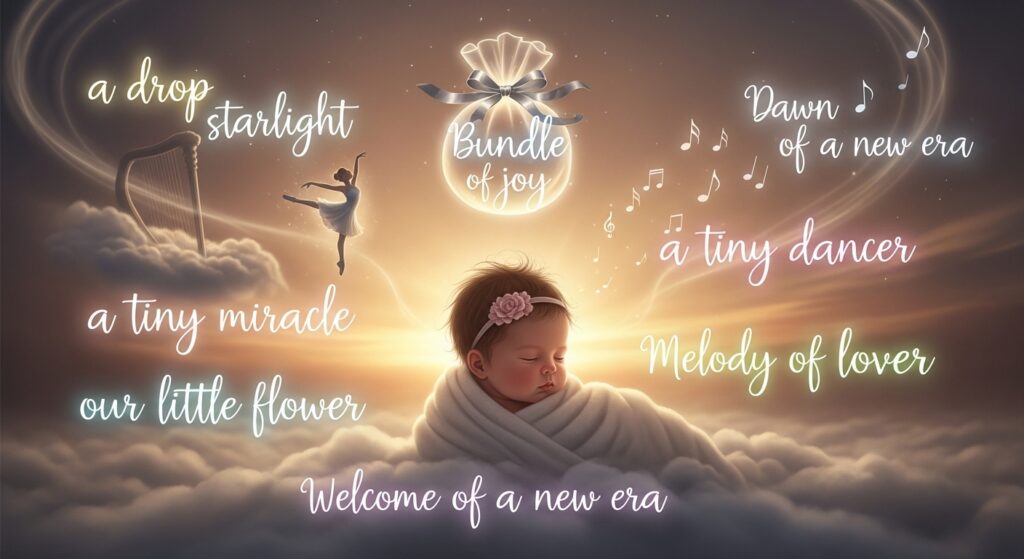
Using figurative language for newborn messages transforms a simple greeting into an emotional keepsake. Imagine a card that reads:
- “Your little hands will weave constellations in our hearts.”
- “May her laughter scatter like petals in the wind, softening every hard day.”
- “She is the sunrise in your family’s forever sky.”
These aren’t just messages; they’re emotional mini-metaphors, living evidence that figures of speech can make joy tangible.
Across cultures, welcoming a baby girl often involves symbolic gestures like tying red threads in parts of India to ward off evil, or placing coins under a newborn’s pillow in some European traditions. Each act could be described figuratively to deepen meaning: “The thread hugs her future like a protective lullaby.”
Warm, Heartfelt Wishes Using Metaphors, Similes, and Analogies
- “She’ll bloom like a cherry tree in spring unexpected, fragile, and breathtaking.”
- “May her giggles echo like a choir of morning birds through your home.”
- “Her dreams are seeds; may love water them into forests of possibility.”
- “Like a candle in the dark, she’ll light corners you didn’t know needed glow.”
- “She’s a tiny comet, streaking through your life with wonder and chaos.”
- “Her curiosity will ripple outward like stones in a pond, touching everyone around her.”
- “May every hug be a bridge, every smile a lighthouse guiding her.”
Humorous, Playful Messages
- “She’s already bossing the house like a tiny CEO. Invest wisely in snacks and hugs.”
- “Tiny feet, giant chaos. Prepare for adorable destruction!”
- “May her temper tantrums be as short as her socks are small.”
- “She’s your little Wi-Fi signal of happiness always needed, never perfect.”
- “Milk spills now, laughter later. Life in metaphor!”
Inspirational and Poetic Wishes
- “Life will stretch ahead like a blank canvas, and she will be the brush.”
- “Her heart is a river, flowing with stories yet untold.”
- “Let her spirit rise like incense smoke, visible only to those who look carefully.”
- “She’ll carry suns and moons in her eyes; let her light guide you too.”
- “In every step she takes, may courage dance like a flame in the wind.”
Practical Advice: How to Write a Custom Figurative Message

- Observe: Watch the newborn, their gestures, sounds, and surroundings.
- Compare: Choose an element from nature, art, or daily life that mirrors their energy.
- Layer Meaning: Add emotion, cultural symbolism, or humor.
- Keep it Tangible: Avoid overcomplication; metaphors should clarify, not confuse.
- Personal Touch: Include names, habits, or unique family quirks.
Even a simple phrase like “Her giggle is sunshine spilling over tea cups” feels intimate, playful, and memorable.
Frequently Asked Questions
what is a metaphor
A metaphor is a figure of speech that directly compares two unrelated things by stating that one is the other, helping to create vivid imagery or understanding.
figurative language examples
Figurative language includes metaphors, similes, analogies, personification, hyperbole, and idioms, all used to express ideas in a non-literal, creative way.
similes and metaphors
A simile compares two things using “like” or “as”, while a metaphor makes a direct comparison without those words.
what is figurative language examples
Figurative language uses words or phrases beyond their literal meaning, such as “time is a river”, “she’s like a magician”, or “the wind whispered”.
metaphor vs simile
A metaphor says one thing is another, creating a strong image, while a simile shows similarity using “like” or “as”, making the comparison explicit.
Read This blog: https://marketbellione.com/from-start-to-finish-ways-to-outline-a-story/
Conclusion: The Power of Figurative Language in Celebrating Life
Welcoming a baby girl is not just a literal event it’s a tapestry of feelings, expectations, and tiny revolutions in hearts. Using figurative language metaphors, similes, analogies turns ordinary words into vessels for joy, wonder, and timeless memory.
As Frank Herbert might say, “A beginning is the most delicate part of any endeavor,” and writing about beginnings requires care, love, and a touch of linguistic magic.
By blending creativity, observation, and the courage to speak beyond the literal, you create messages that echo like a lullaby through years, reminding both sender and receiver of the power of words.
Share your favorite metaphors, similes, or analogies in the comments, or try crafting one that captures your own unique moment because when it comes to celebrating life, every word matters, especially those that dare to stretch meaning, dance with emotion, and illuminate invisible threads.