

Math, like life, sometimes sneaks up on us in ways we least expect. I remember sittin’ at the kitchen table as a kid, my tiny fingers smudged with pencil lead, staring at a problem like 53 x 7, thinking, “how in the world do I even start?”
But then, slowly, almost magically, I discovered the rhythm of multiplying in columns, that satisfying tap-tap of numbers stacking neatly above each other, carrying over like secrets whispered from one line to the next. It’s funny how a method so simple can feel like a mini adventure each time.
Learning to multiply in columns is one of those small victories in a child’s world like tying their shoelaces, or finally writing their name without reversing letters. And it’s not just about getting the right answer.
It’s about understanding the mathematical concepts, feeling confident with 1-digit numbers interacting with 2-digit numbers, and laying a solid foundation for tackling multi-digit whole numbers in the future.
So, let’s dive in, not just to multiply in columns practice, but to explore this method in a way that’s lively, practical, and yes, even a little quirky because learning math doesn’t have to be stiff and boring.
| Problem | Step 1 (Ones) | Step 2 (Tens) | Answer |
|---|---|---|---|
| 14 × 3 | 3 × 4 = 12 → 2 carry 1 | 3 × 1 = 3 + 1 = 4 | 42 |
| 27 × 5 | 5 × 7 = 35 → 5 carry 3 | 5 × 2 = 10 + 3 = 13 | 135 |
| 36 × 4 | 4 × 6 = 24 → 4 carry 2 | 4 × 3 = 12 + 2 = 14 | 144 |
| 53 × 7 | 7 × 3 = 21 → 1 carry 2 | 7 × 5 = 35 + 2 = 37 | 371 |
| 48 × 6 | 6 × 8 = 48 → 8 carry 4 | 6 × 4 = 24 + 4 = 28 | 288 |
| 62 × 9 | 9 × 2 = 18 → 8 carry 1 | 9 × 6 = 54 + 1 = 55 | 558 |
| 75 × 8 | 8 × 5 = 40 → 0 carry 4 | 8 × 7 = 56 + 4 = 60 | 600 |
Why Multiply in Columns Matters

Before we get our pencils out and start scribbling numbers, it’s worth asking: why do we even multiply in columns instead of just guessing or using a calculator?
Well, the truth is, column form multiplication helps students internalize basic multiplication facts, understand place value, and gain confidence with 1-digit by 2-digit multiplication, 1-digit by 3-digit multiplication, and eventually, 1-digit by 4-digit multiplication.
Think of it like stacking building blocks. Each number is a block, and the column form helps you see how they pile up. You see the tens, the hundreds, the ones, all neatly lined up. Without this visual structure, multi-digit multiplication can feel like juggling invisible balls—tricky and stressful.
Even in kindergarten to grade 5 or Grade 4, kids who master column multiplication tend to have an easier time with multi-digit multiplication, 3-digit numbers, and even 4-digit numbers later on.
yes, it can even be a lot more fun than you think if you use worksheets, flashcards, and educational resources / platforms like K5 Learning.
Step-by-Step Guide to Multiply in Columns: 1-Digit by 2-Digit Numbers
Alright, now let’s get our hands dirty. Let’s take 53 x 7 as our example. Here’s how you can teach or learn this method step by step, in a way that actually sticks in your brain:
- Step 1: Write in column form. Write 53 on top, 7 underneath, lining the digits by place value tens above tens, ones above ones.
- Step 2: Multiply the ones place. Multiply 7 by 3 (ones digit of 53), which is 21. Write down 1, carry over 2 to the tens column.
- Step 3: Multiply the tens place. Multiply 7 by 5 (tens digit of 53), which is 35. Add the carried over 2 to get 37. Write 37 to the left of your 1 from the previous step.
- Step 4: Read your answer. The final result is 371. See? Clean, simple, and satisfying.
This same method can be expanded for 1-digit by 3-digit multiplication or multi-digit whole numbers, with the only difference being more columns to handle and more numbers to carry over.
Making It Fun with Worksheets and Practice
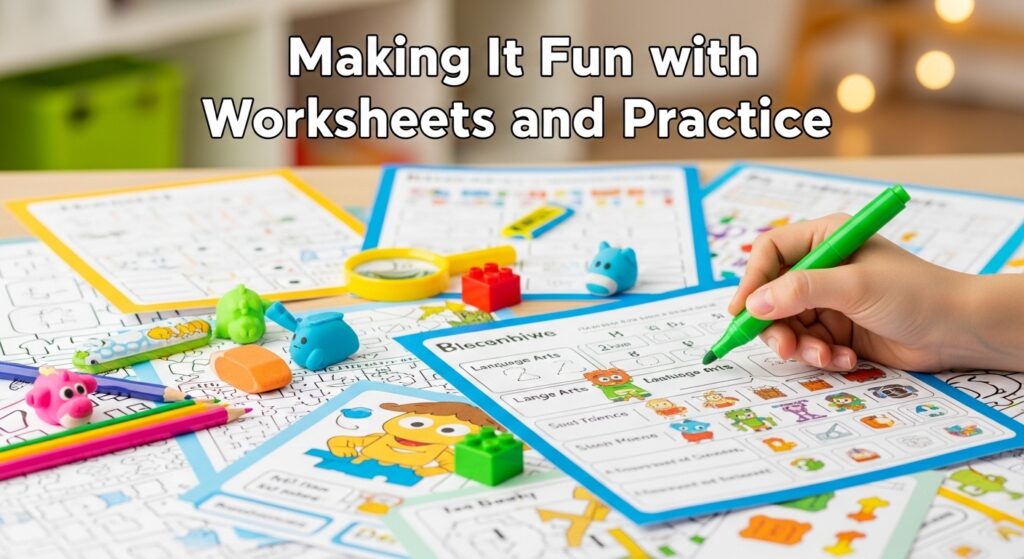
Now, I know what you’re thinking worksheets. Ugh, boring, right? But hear me out. There’s a world of practice worksheets out there that are actually fun and designed to make your brain do cartwheels:
- Worksheet #1: Basic 1-digit by 2-digit numbers, like 14 x 3 or 27 x 6. Great for warming up.
- Worksheet #2: Slightly trickier numbers, maybe involving a carry-over for both digits.
- Worksheet #3: Mix of 1-digit by 2-digit and 1-digit by 3-digit multiplication to challenge mental math.
- Worksheet #4: Introduction to multi-digit multiplication with 3-digit numbers multiplied by a 1-digit number.
- Worksheet #5: Word problems that require column form thinking great for linking mathematical concepts to real life.
- Worksheet #6: Timed drills, perfect for Grade 4 and beyond, pushing fluency and confidence.
There are free / paid resources online that provide similar worksheets, examples, and even flashcards to reinforce learning. K5 Learning is one such platform that offers structured workbooks for kids in kindergarten to grade 5.
Creative Ways to Teach or Learn
Here’s a little secret: kids (and adults) retain multiplication better when it’s connected to stories or visuals.
- Mini-stories: Imagine each digit as a character. The 7 in 53 x 7 is like a superhero multiplying 53 citizens in its city. Suddenly, math becomes a tiny adventure.
- Real-life examples: If a baker makes 53 cookies each day and bakes for 7 days, how many cookies? Boom—practical, relatable, and sticky in memory.
- Flashcards: You can make DIY flashcards, even scribble on the back funny doodles to remember carries and digits.
A teacher I spoke to once said, “I saw a kid literally start humming when he got the carry-over right in column form multiplication. It’s like they unlock a mini superpower.” True story.
Different Approaches: Warm, Funny, and Poetic

When learning 1-digit by 2-digit numbers, it helps to vary the approach:
- Warm: “You’ve got this! See how 7 dances with 53? Isn’t it lovely when numbers play together?”
- Funny: “53 x 7 = 371. That’s like 371 chocolate bars you suddenly owe your entire family…hope they like chocolate.”
- Poetic: “Multiply the tens, whisper to the ones, carry the secrets to the next line, and let the answer bloom like a garden of numbers.”
Different tones appeal to different learners, and it makes the practice less robotic. Kids remember the experience, not just the procedure.
Cultural and Real-Life Connections
Across the world, multiplication is celebrated differently. In some cultures, teachers incorporate songs or chants for multiplication facts. In others, parents give little rewards stickers, stars, or even chocolate for mastering 1-digit by 2-digit multiplication.
In Japan, for instance, students use educational worksheets with cute illustrations to practice column form multiplication, making it more playful. In India, some schools emphasize flashcards and repeated oral practice for fluency. These variations show that while the method multiply in columns remains universal, the learning style adapts to cultural context.
From 1-Digit by 2-Digit to Multi-Digit Multiplication
Once a child masters 1-digit by 2-digit multiplication, the next step naturally is 1-digit by 3-digit multiplication or 1-digit by 4-digit multiplication. The logic is the same: line up the columns, multiply, carry over, repeat. The numbers get bigger, sure, but the structure stays comforting.
- Tip: Always double-check carries. Even adults sometimes slip when moving from 2-digit numbers to multi-digit whole numbers.
- Practice idea: Start with simple numbers and gradually increase complexity. Worksheets can be designed progressively, from Worksheet #1 to Worksheet #6, increasing both digit size and difficulty.
Practical Advice: How to Make Your Multiplication Practice Stick
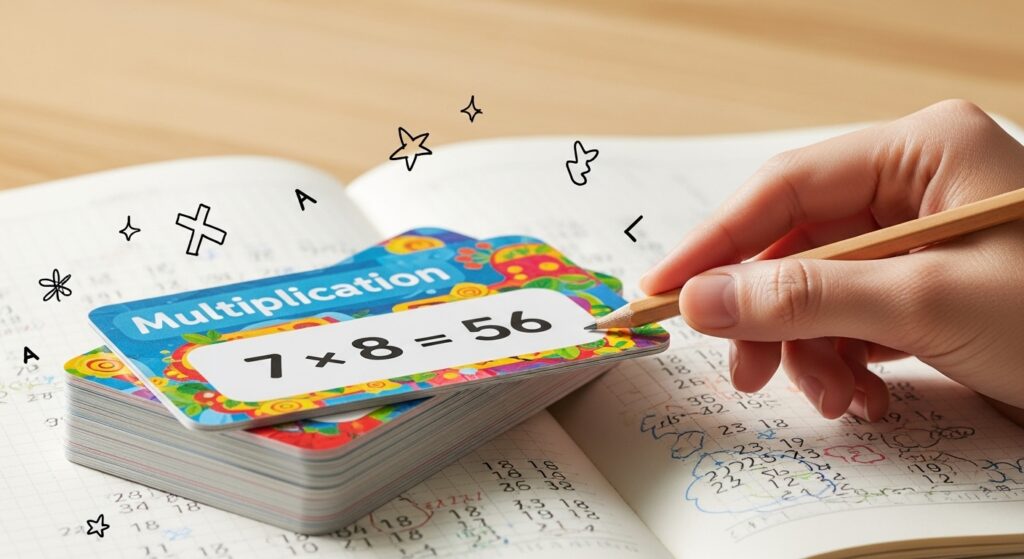
- Use colorful pencils: It’s easier to track carries and place value if each column has a different color.
- Speak it out loud: “7 times 3 is 21…carry 2…” Hearing the numbers reinforces memory.
- Mix it with games: Set a timer for a “speed round” or make a small competition out of completing practice worksheets.
- Use online educational resources / platforms: They often have instant feedback and interactive features.
Even if you’re working with your own kids or tutoring, these small touches make column form multiplication less intimidating and more engaging.
How to Write a Custom Message or Story Around Numbers
Sometimes it helps to connect numbers to stories. For example, instead of just giving 53 x 7, you could create a scenario:
- “You planted 53 flowers in each garden, and you have 7 gardens. How many flowers in total? Let’s multiply in columns and see the magical number appear!”
- This method links mathematical concepts with real-life application, making it more tangible and memorable.
Encouraging Continuous Learning
Lastly, the goal is not just to solve 1-digit by 2-digit multiplication, but to instill curiosity and confidence. Encourage kids to:
- Try similar worksheets on their own.
- Explore multi-digit multiplication when ready.
- Use math practice activities like flashcards or timed drills.
- Reflect on their progress; even small wins are worth celebrating.
As one parent told me, “I never thought my daughter would actually enjoy math. But the first time she multiplied 53 x 7 correctly on her own, her face lit up like she’d won a prize.”
Frequently Asked Questions
2 digit by 1 digit multiplication
This involves multiplying a two-digit number by a single-digit number, often using column method or repeated addition to find the product.
Single digit multiplication
This focuses on multiplying numbers from 0 to 9, which forms the foundation for all higher multiplication skills.
2 digit by 1 digit multiplication worksheets
These worksheets provide practice problems to help students master multiplying two-digit numbers by single-digit numbers.
Two digit by one digit multiplication
This is another way to describe multiplying a two-digit number by a one-digit number, emphasizing step-by-step calculations.
Single digit multiplication worksheets
These worksheets offer exercises for practicing basic multiplication of single-digit numbers, helping build speed and accuracy.
Read this Blog: https://marketbellione.com/tracing-letters/
Conclusion: The Beauty of Multiply in Columns
Multiplying in columns, especially with 1-digit by 2-digit numbers, is more than a procedural skill. It’s a gateway to understanding mathematical concepts, building confidence in Grade 4 and beyond, and appreciating the beauty of structure and logic. With a little creativity, worksheets, flashcards, and playful examples, even the most hesitant learners can find joy in numbers.
So grab your pencil, line up those digits, and watch as 7 dances with 53, or 9 meets 84. Every carry, every column, is a tiny victory. And in that moment, math is not just something you do it’s something you experience, feel, and celebrate.