
Have you ever been reading an essay or an article and felt your brain sort of… bumping along, like a car on cobblestones? That awkward feeling, when ideas seem scattered, sentences feel lonely, and paragraphs refuse to talk to each other…
well, that’s often because transition words weren’t doing their job. And when it comes to comparing and contrasting, the absence of smooth connecting words can make even the sharpest argument feel like a riddle.
I remember my first attempt at writing a comparative essay in high school. I was comparing two novels both classics, mind you but my paragraphs were like little islands.
One minute I was waxing poetic about a character’s courage, the next I’d jump to plot twists, and readers… well, they probably felt seasick.
If only I’d known then how transitional phrases can act like bridges over the turbulent waters of thought, connecting ideas, showing contrast, and keeping the narrative flowing naturally.
Let’s take a deep dive into the world of transition words for comparing and contrasting, exploring not just lists of words, but the subtle art of making your writing feel alive, coherent, and intuitive.
| Type | Purpose | Examples |
|---|---|---|
| Additive | Adds information or reinforces similarity | and, also, moreover, in addition, similarly |
| Contrastive | Shows differences or opposition | but, however, on the other hand, in contrast, yet |
| Cause-and-Effect | Shows reason or result | because, since, therefore, consequently, thus |
| Time/Sequential | Shows sequence or chronology | first, next, then, meanwhile, finally |
| Exemplification | Gives examples or illustrates | for example, for instance, namely, specifically, to illustrate |
| Summarization/Conclusion | Wraps up ideas or emphasizes points | in conclusion, in summary, overall, therefore, thus |
Why Transition Words Matter in Comparing and Contrasting
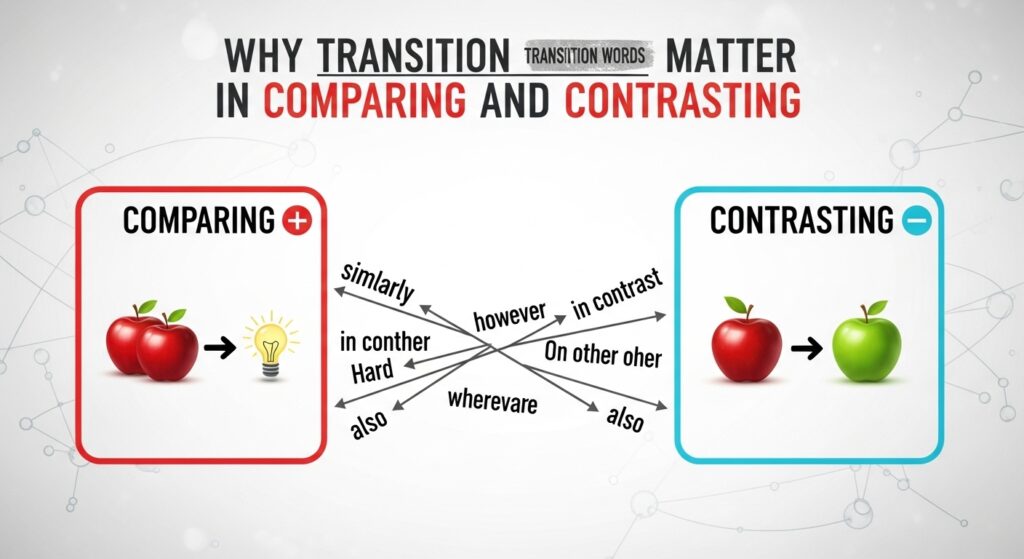
You might think, “oh, they’re just little words, like however or also,” but let me tell ya, these linking words carry the weight of entire ideas.
They don’t just connect ideas; they illuminate relationships between ideas, highlight contrast or similarity, and give readers a sense of journey. Without them, essays, reports, or articles can feel like jumbled thoughts rather than a structured argument.
For example:
- “Cats are independent. Dogs need attention.”
Straightforward, but kinda flat, right? Now, add a contrastive transition:
- “Cats are independent; in contrast, dogs require constant attention.”
Boom. Suddenly, the relationship between ideas is crystal clear. Your reader sees the comparison instantly, and the flow of language improves without them even noticing it consciously. That’s the beauty of sentence connectors and paragraph transitions.
Types of Transition Words for Comparing and Contrasting
When it comes to comparing and contrasting, not all connecting words are created equal. Some show similarity, some highlight differences, and others guide the reader through a logical argument. Let’s explore some major categories.
Additive Transitions – When You Want to Pile On
Additive transitions are like saying, “hey, wait, there’s more!” They’re perfect when you’re adding ideas that support a similarity.
Examples include:
- And, also, moreover, furthermore, in addition, similarly, equally important
Try using them like this:
- “Both novels explore family dynamics. Moreover, they delve into the struggles of identity.”
- “Jazz and blues share roots in African-American culture. Similarly, both emphasize improvisation.”
See how the flow improves? The ideas connect seamlessly, and the reader can follow along without effort.
Contrastive Transitions – Spotting the Differences
Contrastive transitions are your go-to for showing opposition or difference. They’re crucial in essays, debates, and any writing where counterarguments need acknowledgment.
Some strong contrastive transitions include:
- But, however, on the other hand, in contrast, nevertheless, yet, although
Example:
- “Smartphones are great for staying connected. However, they can also be a source of distraction.”
Notice how the transition immediately signals to the reader that a counterpoint is coming. This clarifies the argument and makes your reasoning stronger.
Cause-and-Effect Transitions – Linking Reason and Outcome
When comparing and contrasting, sometimes the difference or similarity arises from a cause-and-effect relationship. These transitions show why one thing follows from another, making the argument more persuasive.
Examples include:
- Because, since, as a result, consequently, therefore, thus
Example sentence:
- “Electric cars reduce carbon emissions. Consequently, they are becoming more popular in urban areas concerned with pollution.”
This kind of illustration adds depth, helping readers understand not just what is happening, but why.
Time and Sequential Transitions – Guiding the Reader
Sometimes comparisons are chronological: events, processes, or developments that evolve over time. Time transitions or sequential markers help organize ideas in a temporal flow.
Examples include:
- Meanwhile, next, then, finally, subsequently, initially
For instance:
- “Initially, both programs focused on literacy skills. Subsequently, they expanded to include digital literacy.”
It keeps the paragraphs coherent and the narrative moving, avoiding the dreaded “idea clump” effect.
Exemplification and Illustration – Showing, Not Telling
When you want to illustrate your point, you need exemplification transitions. These are critical in comparing and contrasting because examples make abstract similarities or differences concrete.
Some options:
- For example, for instance, namely, specifically, to illustrate, such as
Example:
- “Both smartphones and tablets are used for education. For instance, students often use tablets for interactive lessons, while smartphones are better for quick research.”
By adding these, your essay doesn’t just tell—it demonstrates. Readers instantly get a picture of your point.
Summarization and Concluding Transitions – Wrapping It Up
Finally, you need transitions to summarize and conclude, especially when you’ve laid out multiple comparisons or contrasts. These words help restate ideas, reinforce arguments, and leave readers with a clear takeaway.
Examples:
- In conclusion, in summary, thus, therefore, overall, consequently
Example:
- “In summary, while cats and dogs have different care needs, both bring joy and companionship to households.”
This gives closure, signaling that the argument arc has reached its destination.
Real-Life Tips for Using Transition Words Effectively
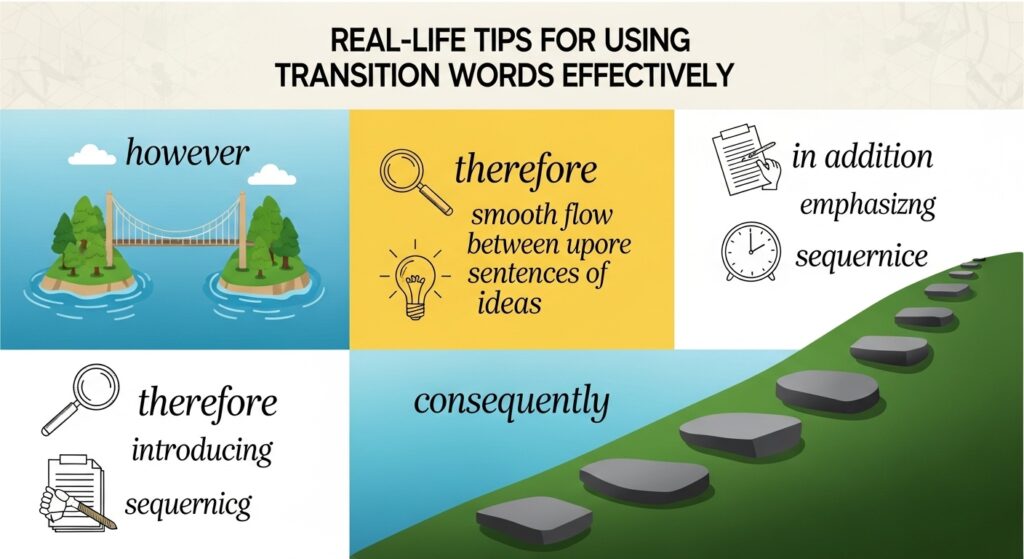
Knowing the words is just the start. The real magic happens when you use them naturally, weaving them into sentences, paragraphs, and entire essays.
- Vary your transitions: Don’t just use “however” all the time. Mix in “on the other hand,” “yet,” or “in contrast” to keep the reader engaged.
- Match tone to purpose: Formal essays may use “nevertheless” or “consequently,” while blog posts can be lighter with “also” or “for example.”
- Don’t overstuff: Too many transitions can make writing feel mechanical. Use them where clarity and coherence benefit most.
- Check relationships: Every transition should show a relationship whether it’s similarity, contrast, cause-and-effect, or sequence.
As a writer once told me, “Transitions aren’t just words; they’re tiny tour guides for your readers’ brains.” And honestly, I think that captures it perfectly.
How Transition Words Improve Comparing and Contrasting
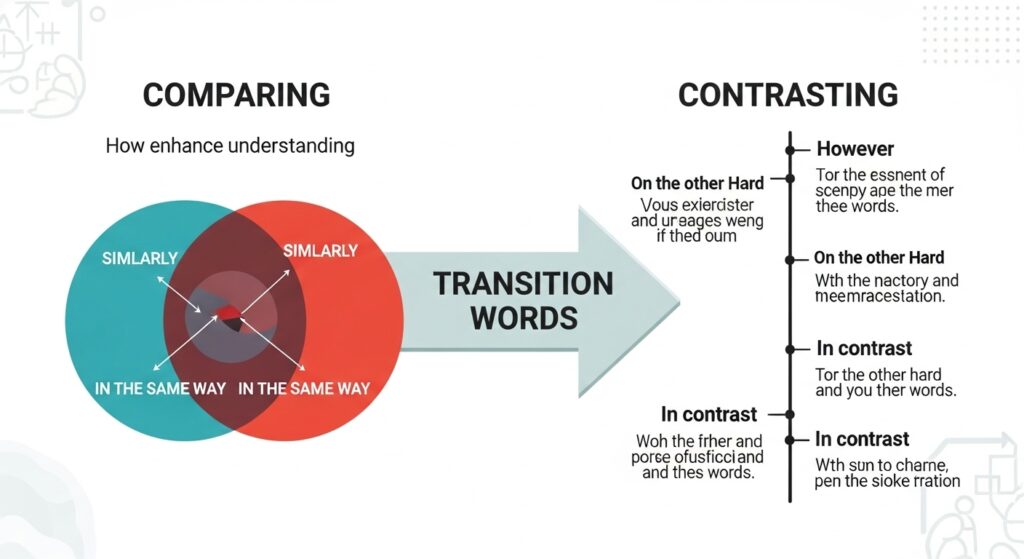
When you use transitions intentionally:
- Your ideas connect across sentences and paragraphs
- Comparisons and contrasts are instantly recognizable
- Arguments become coherent, persuasive, and easy to follow
- Your writing gains clarity, flow, and professionalism
Even in casual writing, like emails or blog posts, signal words make your points land with less effort from the reader.
Practical Examples – Making It Work
Let’s see a mini-comparison using multiple transition types:
- Cats vs. Dogs
“Cats are generally independent. Similarly, they require less constant supervision than dogs. However, dogs often provide more social interaction and can be trained for specific tasks.
Because dogs are highly social animals, they thrive in environments where human attention is abundant. For example, a golden retriever will happily follow its owner around the house. In conclusion, while cats and dogs differ in personality and care needs, both offer unique companionship benefits.”
Notice how the flow of language, coherence, and relationships between ideas are all enhanced by a careful sprinkling of transition words and phrases.
Creative Ways to Practice Transition Words
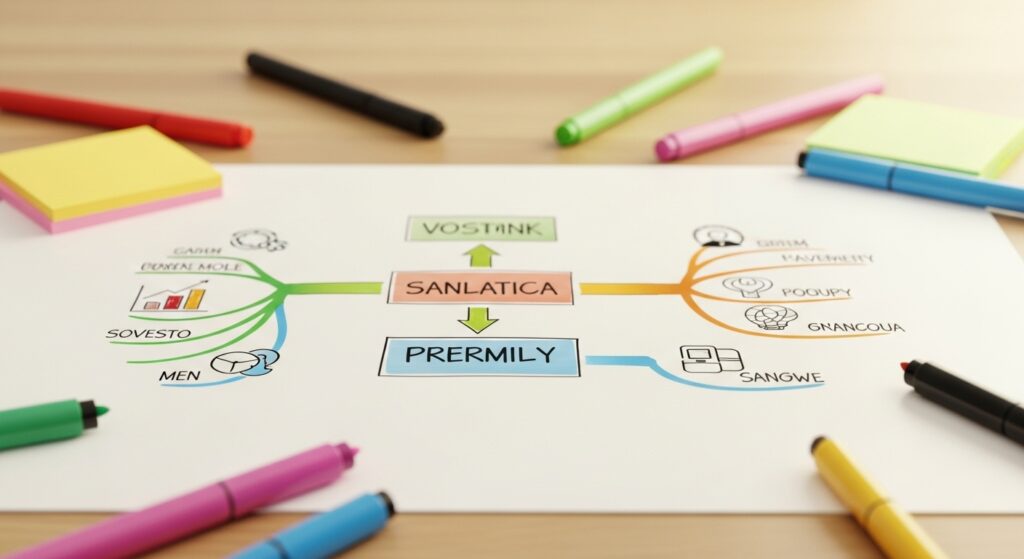
To truly master transitional phrases, you can try:
- Mind mapping ideas first, then adding linking words to connect them
- Rewriting paragraphs using at least three different contrastive or additive transitions
- Reading aloud, noticing where your writing feels choppy, and inserting logical connectors
- Peer review: Ask someone to spot where ideas feel disconnected often the fix is a simple transition word
Even writing social media threads or newsletter articles benefits. Transitions make readers stay engaged and ideas digestible.
Frequently Asked Questions
What are transition words?
Transition words are words or phrases that connect ideas, sentences, and paragraphs, making writing smooth and easy to follow.
Why are transition words important in comparing and contrasting?
They highlight similarities and differences, clarify relationships between ideas, and improve the overall flow of language.
Can transition words make informal writing better too?
Yes! Using linking words in blogs, emails, or social media posts helps ideas stay connected and improves readability.
What’s the difference between additive and contrastive transitions?
Additive transitions add information or reinforce points, while contrastive transitions highlight differences or opposing ideas.
How can I practice using transition words effectively?
Try rewriting paragraphs, reading aloud to spot choppy spots, and adding appropriate connectors to link ideas naturally.
Read this blog: https://marketbellione.com/complete-predicate/
Conclusion – The Art of Seamless Flow
Mastering transition words for comparing and contrasting isn’t just about memorizing lists. It’s about understanding the relationships between ideas, guiding readers naturally, and elevating clarity and coherence. With practice, your essays, reports, or articles stop feeling like isolated thoughts and start to flow like a conversation that readers can’t help but follow.
So next time you sit down to write, think of transitional phrases as bridges, signposts, and friendly guides, whispering: “this idea connects to that one, see how it all fits?” Once you embrace them, your writing gains rhythm, polish, and the kind of clarity that even casual readers can appreciate.
Remember, words like however, similarly, or for instance aren’t just academic fluff they’re your toolkit for crafting smooth, compelling, and thoughtful comparisons. And isn’t that what great writing is all about?