
Learning a language isn’t just about memorizing words, it’s about breathing life into them. And when it comes to Spanish verbs, few capture the essence of life quite like vivir.
Literally meaning “to live,” it’s a verb that dances through conversation, storytelling, and even in your deepest reflections about existence. I remember sittin’ in a small café in Seville, scribbling in my notebook, trying to figure out vivir conjugation in every tense.
The waiter smiled, probably thinking I was crazy, but I was in love not with him, with the verb itself. You’ll see soon enough why vivir is more than a word; it’s a life philosophy, a way to connect cultures, and a window into Spanish language and culture study.
| Tense | Yo | Tú | Él/Ella/Usted | Nosotros | Vosotros | Ellos/Ellas/Ustedes |
|---|---|---|---|---|---|---|
| Present | vivo | vives | vive | vivimos | vivís | viven |
| Preterite | viví | viviste | vivió | vivimos | vivisteis | vivieron |
| Imperfect | vivía | vivías | vivía | vivíamos | vivíais | vivían |
| Future | viviré | vivirás | vivirá | viviremos | viviréis | vivirán |
| Conditional | viviría | vivirías | viviría | viviríamos | viviríais | vivirían |
| Present Subjunctive | viva | vivas | viva | vivamos | viváis | vivan |
| Imperative | — | vive | viva | vivamos | vivid | vivan |
Why “Vivir” is Essential in Spanish
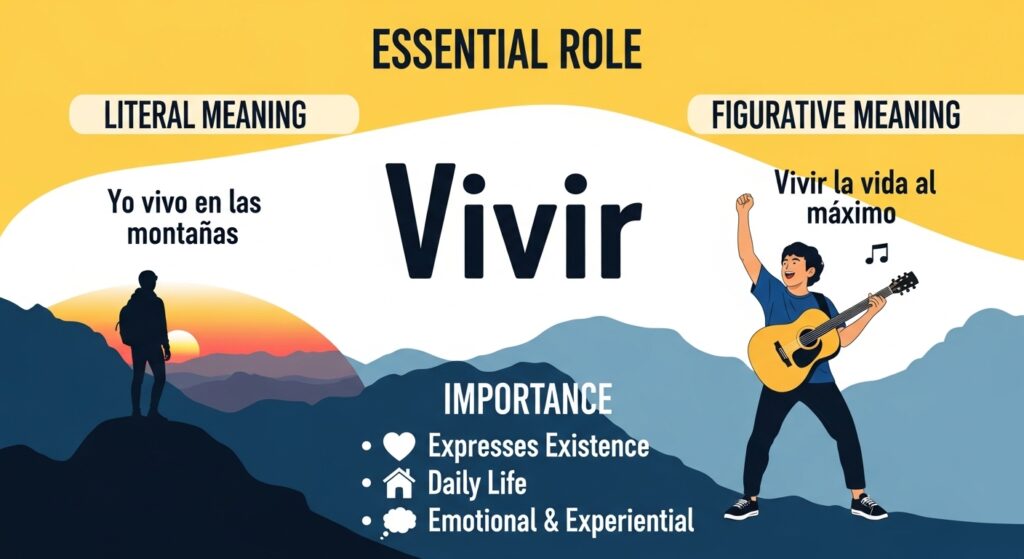
Some verbs are like bricks, foundational, steady, unmovable vivir is like sunlight, flowing, adaptable, essential for conversation. Whether you’re practicing Spanish flashcards, preparing for AP Spanish Language and Culture, or exploring CLEP Spanish Language Levels 1 and 2, vivir pops up everywhere.
From casual chats like “yo vivo en Madrid” to poetic lines in literature, knowing vivir conjugation in various tenses transforms how you express your experiences.
And if you’re also studying English as a New Language or prepping for MTEL English as a Second Language (ESL), noticing patterns in verbs like this will help with learning parallel structures in English.
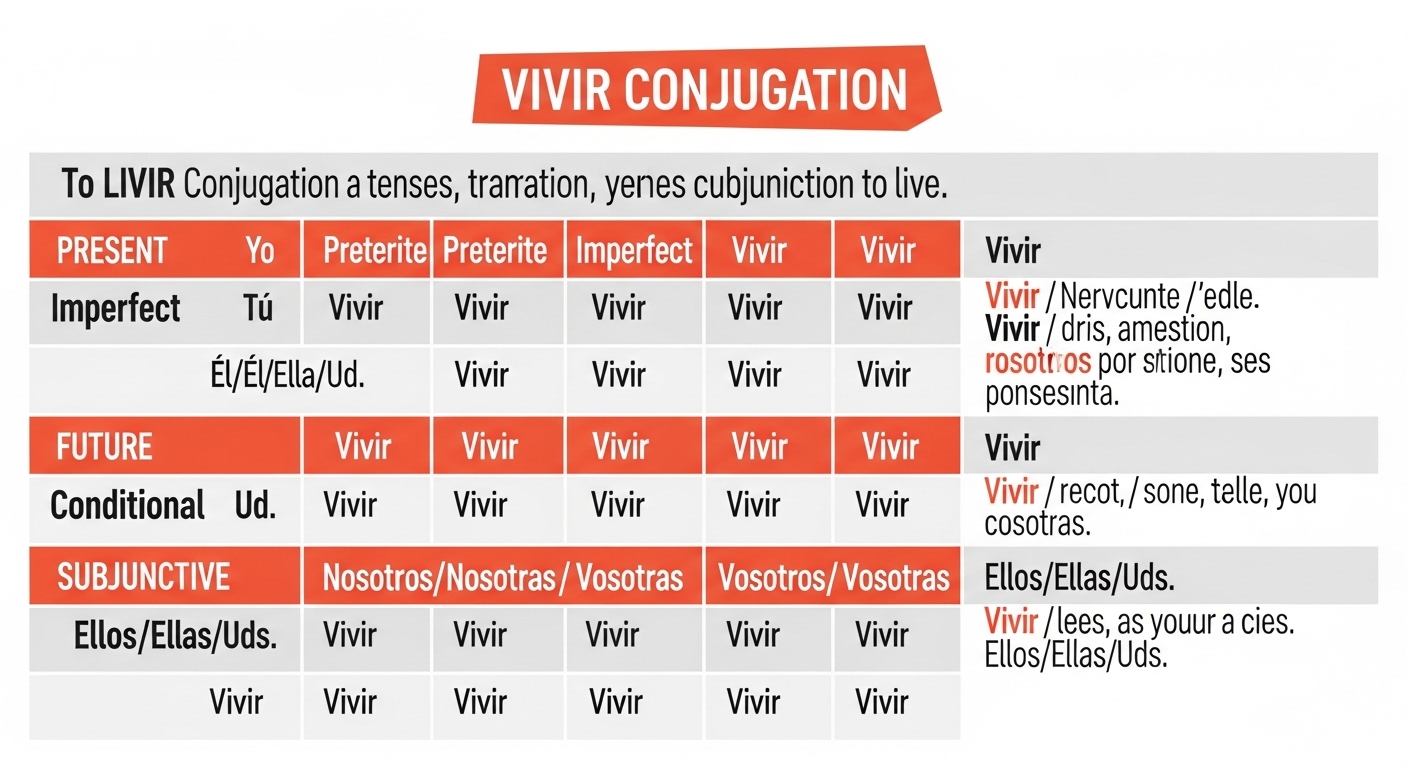
Vivir Conjugation Chart
Here’s the heart of it because sometimes a visual helps you wrap your brain around it.
Present Tense
- Yo vivo
- Tú vives
- Él/Ella/Usted vive
- Nosotros/Nosotras vivimos
- Vosotros/Vosotras vivís
- Ellos/Ellas/Ustedes viven
Preterite Tense
- Yo viví
- Tú viviste
- Él/Ella/Usted vivió
- Nosotros/Nosotras vivimos
- Vosotros/Vosotras vivisteis
- Ellos/Ellas/Ustedes vivieron
Imperfect Tense
- Yo vivía
- Tú vivías
- Él/Ella/Usted vivía
- Nosotros/Nosotras vivíamos
- Vosotros/Vosotras vivíais
- Ellos/Ellas/Ustedes vivían
Future Tense
- Yo viviré
- Tú vivirás
- Él/Ella/Usted vivirá
- Nosotros/Nosotras viviremos
- Vosotros/Vosotras viviréis
- Ellos/Ellas/Ustedes vivirán
Conditional Tense
- Yo viviría
- Tú vivirías
- Él/Ella/Usted viviría
- Nosotros/Nosotras viviríamos
- Vosotros/Vosotras viviríais
- Ellos/Ellas/Ustedes vivirían
Notice how versatile it is conjugation in sentences isn’t just grammar, it’s a way to breathe life into stories.
Using Vivir in Different Moods and Contexts
Spanish is full of moods subjunctive, imperative, conditional and each one paints a slightly different shade of “living.”
Subjunctive Example:
- Es importante que tú vivas cada día como si fuera el último.
Here, vivas expresses hope, wish, or possibility perfect for motivational writing or even when giving advice to a friend.
Command Form:
- ¡Vive tu vida!
Short, punchy, unforgettable. Great for cards, speeches, or when telling someone to embrace life fully.
Present Progressive:
- Estoy viviendo momentos inolvidables.
Because sometimes life is happening right now, and you gotta capture it as it flows.
Vivir Conjugation in Sentences
Understanding the chart is one thing, using it in conversation examples is another. Let’s look at some real-life applications:
- Cuando era niño, yo vivía en un pequeño pueblo cerca del río.
- Mañana viviré una aventura que nunca olvidaré.
- Ellos han vivido muchas experiencias durante sus viajes por España.
These sentences show preterite vs imperfect usage, and how context changes meaning a crucial concept for anyone preparing for AP Spanish Literature and Culture or Spanish past tense exercises.
Creative Ways to Practice Vivir
Now, it’s time to get messy and creative because verbs are meant to live, not just sit on flashcards.
- Write mini-stories where the main character vive in different countries try switching tenses mid-story.
- Use songs in Spanish and underline every form of vivir you find.
- Pair it with verbs like estudiar, alcanzar, or caminar to create dynamic sentences for lesson summary exercises.
Even little things like almorzar with friends while talking about what you viviste last weekend can help cement memory.
Vivir in the Context of Learning and Testing

If you’re preparing for TOEIC, BULATS Business English, or CTEL 1 – Language & Language Development, knowing Spanish verbs like vivir isn’t just a cultural bonus it sharpens your linguistic intuition.
Many students, as Joanna Tatomir notes, struggle with switching between subjunctive vs conditional mood, but seeing verbs in both languages side by side Spanish and English makes a huge difference.
You might write on your flashcard:
- Yo viviría en París si pudiera. → I would live in Paris if I could.
And then practice conjugation in conversation with classmates or tutors.
Fun with Vivir: Anecdotes and Cultural Insights
Did you know in some parts of Mexico, when welcoming a new baby girl, families will say: “Que viva la princesita de la casa!” It literally means “May the little princess live happily in our home,” and it’s a beautiful, living example of Spanish language and culture study coming to life.
Grandparents often whisper similar lines: “Espero que vivas con alegría y curiosidad,” which is basically a mini blessing wrapped in a verb. These real-life usages show how grammar and affection blend seamlessly perfect for anyone looking to make their messages more heartfelt.
Example: Creating Messages with Vivir

Here’s how you can creatively weave vivir conjugation into messages, not just study material:
- Warm: “Que vivas cada día como un poema, lleno de colores y risas.”
- Humorous: “Vive rápido, come tacos lento, y ríe mucho.”
- Inspirational: “Si vives con pasión, incluso los lunes se sienten como viernes.”
- Poetic: “Vive donde los sueños tocan la tierra y las estrellas te guían a casa.”
You can also integrate other Spanish verbs like aprender, ganar, andar, tener, and caminar for richer sentences.
How to Write Custom Messages
Want your wishes or sentences to feel more personal? Here’s a mini-guide:
- Think of the person’s personality. Are they adventurous, quiet, poetic? Match the verb tense to their life story.
- Add mini anecdotes maybe they vivieron abroad, or they viven with pets.
- Mix tones humor + warmth always lands well.
- Don’t worry about perfect grammar small colloquial spelling or grammar quirks make it feel human.
Example:
- “Oye, que vivas como si la vida fuera un picnic en Sevilla con chocolate y churros.”
Practical Takeaways
- Study resources for ELL students often recommend integrating verbs into daily life talking about what you viviste yesterday or what you hope to vivir tomorrow.
- Pair verbs with thematic flashcards: love, adventure, work, family.
- For Spanish verb forms mastery, cycle through tenses daily: present → preterite → imperfect → future → subjunctive.
Frequently asked Questions
vivir preterite conjugation
The preterite tense of vivir shows actions completed in the past: Yo viví, Tú viviste, Él/Ella/Usted vivió, Nosotros vivimos, Vosotros vivisteis, Ellos/Ustedes vivieron.
vivir conjugation chart
A vivir conjugation chart organizes all forms of the verb across tenses such as present, preterite, imperfect, future, and subjunctive for easy reference.
vivir imperfect conjugation
The imperfect tense of vivir expresses habitual or ongoing past actions: Yo vivía, Tú vivías, Él/Ella/Usted vivía, Nosotros vivíamos, Vosotros vivíais, Ellos/Ustedes vivían.
vivir past tense
Vivir in past tense can be expressed using either the preterite (completed actions) or imperfect (habitual/ongoing past actions) depending on context.
vivir in future tense
The future tense of vivir indicates actions that will happen: Yo viviré, Tú vivirás, Él/Ella/Usted vivirá, Nosotros viviremos, Vosotros viviréis, Ellos/Ustedes vivirán.
Read this Blog: https://marketbellione.com/querer-in-spanish/
Conclusion
The beauty of vivir isn’t in the chart or the textbooks, it’s in how it lets you narrate your story, connect across cultures, and even sprinkle a little poetry into everyday life.
Whether you’re a student preparing for AP Spanish literature and culture study, a teacher designing activities for teaching English language learners, or just a language lover chasing the joy of words, vivir gives you life, literally.
So next time you jot a note, write a message, or share a story, think about vivir conjugation. Think of all the lives you can touch with it. After all, language isn’t just grammar it’s life itself, unfolding, unpredictable, and endlessly beautiful.